

THRYVE Team
Wellness Clinic
Estrogen replacement therapy and hormone replacement therapy are sometimes used interchangeably, but estrogen-only and combined hormone therapy are distinct regimens. Their clinical considerations and research findings differ. Here is why the distinction matters
Estrogen replacement therapy often refers to estrogen-only treatment, although the term is sometimes used more broadly. Whether estrogen is prescribed alone or with a progestogen depends on the clinical situation, including whether a person has a uterus, because estrogen given without a progestogen increases the risk of endometrial changes in women who still have one. For women in San Antonio considering treatment, when it begins is among the factors affecting the benefit-risk balance.
The phrase is frequently used to mean hormone therapy in general. Separating estrogen-only from combined regimens is clinically useful, because the two have been studied separately and have different safety considerations.
This covers what separates them, what the evidence shows for estrogen alone, what the timing of treatment changes, and who it may suit.
What Is Estrogen Replacement Therapy Used For?
Estrogen therapy is used to treat symptoms associated with low estrogen around and after menopause, including hot flashes, night sweats and vaginal dryness, and it has an established role in bone health. Where the term estrogen replacement therapy is used specifically, it generally describes estrogen prescribed without a progestogen.
The symptoms it addresses are the same ones combined hormone therapy addresses. The difference is not what it treats but who it suits and what accompanies it.
Estrogen Alone and Combined Therapy Are Different Treatments
Understanding this distinction helps explain why different treatment regimens have different safety considerations.
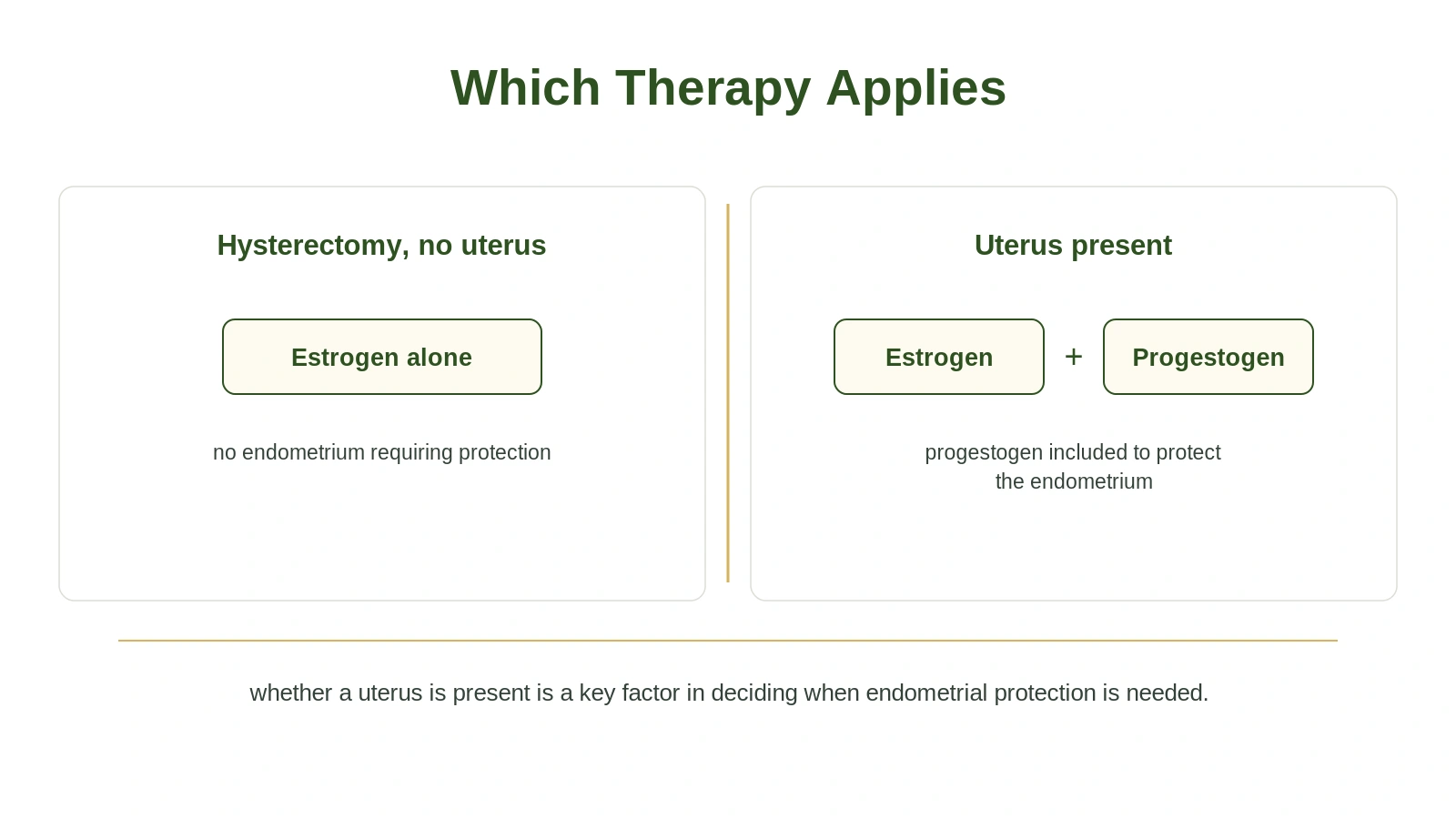
Comparison Term | Estrogen alone | Estrogen with a progestogen |
Generally used by | Women who have had a hysterectomy | Women who still have a uterus |
Why | No uterus means no endometrium requiring protection | The progestogen protects the endometrium from the effects of estrogen |
Treatment description | Estrogen-only hormone therapy | Combined estrogen-progestogen hormone therapy |
Evidence base | Studied separately in its own trial arm, with different findings | The arm whose 2002 results reshaped prescribing worldwide |
The PEPI trial reported a 34 percent risk of endometrial hyperplasia among women with a uterus taking estrogen alone, compared with around 1 percent among those on combined therapy. These findings illustrate why endometrial protection is an important consideration when systemic estrogen is prescribed to someone with a uterus.
What the Research Found for Estrogen Alone
The Women's Health Initiative included separate randomized hormone therapy trials involving women with and without a uterus, and their findings differed.
The combined estrogen-plus-progestin arm was stopped early in July 2002, and its results produced a substantial fall in hormone therapy use worldwide.
The WHI estrogen-alone trial studied postmenopausal women with a prior hysterectomy. Its findings differed from those of the combined-therapy trial, including differences in breast cancer and cardiovascular outcomes. However, the estrogen-alone trial also identified important risks, including stroke. These findings need to be interpreted considering the formulation studied, participant characteristics and the specific outcome being considered.
Published analysis notes that the estrogen-alone results, reported in April 2004, received considerably less attention than the combined-arm findings two years earlier. That asymmetry is part of why public understanding of hormone therapy risk draws mainly on one of the two trials.
Why the details matter when applying the findings
The trials used specific oral formulations in populations whose average age was over a decade past typical menopause onset. Differences in age, regimen and population affect how directly the findings apply to a different situation, without making the findings themselves less valid.
The estrogen-alone trial identified an increased risk of stroke, making cardiovascular and cerebrovascular risk important considerations when interpreting its findings.
What Age Is Too Late for Estrogen?
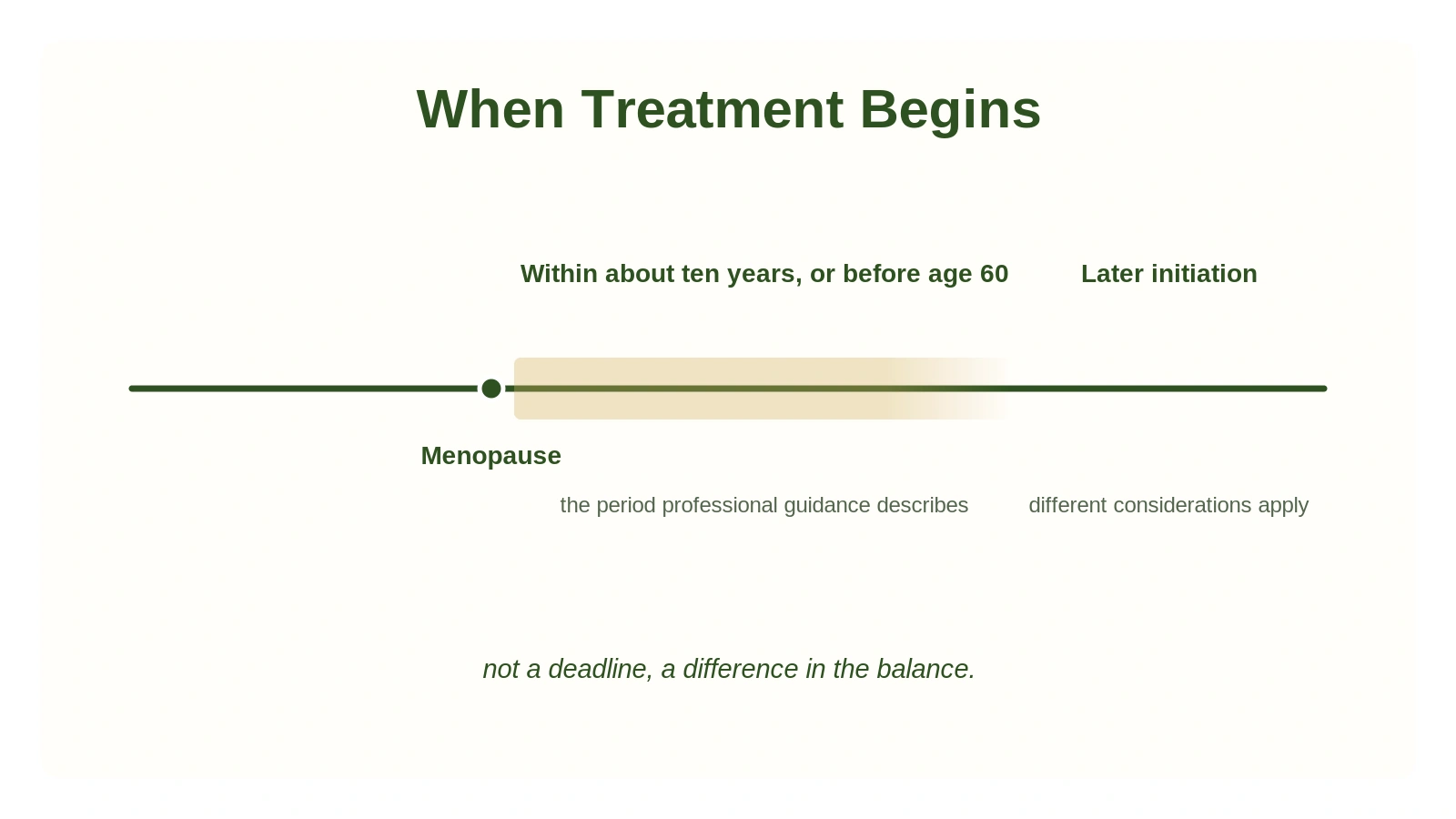
There is no single age at which estrogen therapy automatically becomes inappropriate. For many otherwise healthy women with menopausal symptoms, the benefit-risk balance is generally more favorable when systemic hormone therapy begins before age 60 or within ten years of menopause. Starting later may involve greater risks, so the decision requires individualized assessment of medical history, symptoms and treatment options.
Professional guidance reflects this. Published summaries state that major organizations including ACOG and the Menopause Society support hormone therapy for symptomatic women under 60 or within ten years of menopause onset, in the absence of contraindications.
How timing affects the benefit-risk assessment
Analyses of the WHI data indicate that cardiovascular outcomes were influenced by when treatment began. Initiation before 60 or within ten years of menopause was associated with a different risk profile than initiation considerably later, and published analysis describes this as a timing hypothesis, sometimes called the window of opportunity.
Part of the explanation lies in who the original trial enrolled. Participants were on average more than a decade past menopause, which is unlike the typical pattern of starting treatment for symptoms as they arise.
What this does not mean
It does not mean treatment is unavailable after 60. Published guidance describes different considerations rather than an exclusion, including starting at lower doses
It does not mean every woman under 60 is suitable. Contraindications apply regardless of age
It does not mean the window is a validated safety threshold. It describes a pattern in how the balance shifts, not a boundary at which something changes on a particular birthday
What Are the Side Effects of Estrogen Replacement Therapy?
Side effects vary by preparation, dose and individual. Commonly described effects include breast tenderness, headaches, nausea and fluid retention. Some side effects may improve over time, while others require reassessment. More significant risks, including those relating to blood clots and stroke, depend substantially on the route of administration, the preparation and the individual's circumstances.
Route matters here in a way worth understanding. Published comparative evidence indicates a higher risk of venous thromboembolism with oral estrogen than with transdermal, though the authors of that analysis describe the confidence in it as low. Our guide to delivery methods covers that comparison in detail.
Anything persistent, unexpected or severe is a reason to contact your provider rather than to wait for it to settle.
What the Benefits Are, Stated Carefully
The benefits of estrogen therapy are better established for some outcomes than for others.
Vasomotor symptoms
Relief of hot flashes and night sweats is the most established benefit of estrogen therapy and the indication for which it is most commonly prescribed. Published guidance describes this as the primary reason systemic hormone therapy is used.
Genitourinary symptoms
Vaginal dryness and related symptoms respond to estrogen, and local vaginal preparations exist specifically for this. Where genitourinary symptoms are the main concern, a local preparation may be considered rather than systemic therapy, which is a distinct conversation.

Bone health
Estrogen therapy has an established role in bone density. Whether it is the appropriate choice for an individual depends on their fracture risk, other options available and whether they also have symptoms that systemic therapy would address.
Where the picture is less settled
Cardiovascular outcomes are the clearest example. Published analyses indicate the effect depends substantially on when treatment begins, which is why the timing section above exists rather than a simple statement of benefit or harm. Claims that hormone therapy straightforwardly protects or straightforwardly harms the heart both overstate what the evidence supports.
Who Qualifies for Estrogen Replacement Therapy?
Candidacy is established through clinical evaluation rather than by matching a list. The factors a clinician weighs include:
Whether you have a uterus, which is a key consideration in deciding whether endometrial protection is needed alongside systemic estrogen
The symptoms being experienced, their severity and their effect on daily life
Age and time since menopause, for the reasons described above
Personal and family medical history, including conditions that may contraindicate treatment
Current medications and other conditions that affect which preparations are suitable
Whether other explanations for the same symptoms have been considered
Your own priorities, since symptom relief and risk tolerance differ between people
Published guidance identifies contraindications including breast cancer, active thromboembolic disease and uncontrolled cardiovascular disease. These are matters for clinical assessment rather than self-screening, and the list here is not complete.
Our guide to perimenopause and menopause covers how the stage affects the clinical picture, and our guide to blood tests before HRT or TRT covers what the evaluation typically involves.
Where Can I Get Hormone Replacement Therapy in San Antonio?
San Antonio has several categories of provider: gynecology practices, dedicated hormone and menopause clinics, integrative and wellness practices, primary care, and telehealth services. Providers may differ in their clinical focus, available treatment options, evaluation processes and follow-up arrangements.
In San Antonio, the practical starting point is finding a licensed provider who can assess your symptoms, medical history and treatment options, whether care is arranged through an in-person practice or a telehealth service.
Questions worth asking any provider here
Given my history, is estrogen alone appropriate or would I need a progestogen as well
How does my age and time since menopause affect what you would suggest
Which preparation and route would you propose, and why that one
Is what you are proposing an FDA-approved product or a compounded preparation
What monitoring follows, and how often
The first question is the one this article exists to prompt. A provider should explain how your surgical and medical history affects the proposed treatment.
A note on what THRYVE is
THRYVE Wellness Clinic is a provider-led telehealth service rather than a walk-in clinic. Evaluation, consultations and results review happen remotely, and at-home blood collection may be available in supported San Antonio service areas when appropriate for the tests ordered.
Frequently Asked Questions
Is estrogen replacement therapy the same as HRT?
The terms overlap, but they are not always used in exactly the same way. Estrogen replacement therapy may refer to estrogen-only treatment, while hormone replacement therapy is a broader term that can include estrogen alone or estrogen combined with a progestogen. The distinction between estrogen-only and combined regimens matters because their clinical considerations differ.
What is the best estrogen replacement therapy?
There is no single best preparation. The appropriate choice depends on whether a progestogen is needed, the symptoms being treated, medical history, the preferred route of administration and individual circumstances. Published comparative evidence indicates differences between routes, particularly regarding venous thromboembolism risk with oral compared with transdermal estrogen. Which suits an individual is a clinical decision.
How much does estrogen replacement therapy cost?
Cost varies substantially by preparation, by whether the product is FDA-approved or compounded, by whether insurance applies and by what a quoted figure includes. Our guide to hormone replacement therapy costs covers what drives the variation and which questions make quotes comparable.
Can estrogen replacement therapy help with hair loss?
Hair changes around menopause are commonly reported and have several possible causes, including hormonal change, thyroid conditions, iron status and genetic patterns. Hormone therapy is not primarily a treatment for hair loss, and whether it affects it in an individual case is not something general information can establish. Persistent hair loss is worth investigating with a provider, since identifying the cause determines what would help.
Final Thoughts
Estrogen-only and combined hormone therapy are studied separately and carry different safety considerations. Whether a uterus is present is a key factor in deciding when endometrial protection is needed, alongside the indication, the route and individual risk factors.
The evidence for estrogen alone is also distinct. The trial arm that studied it reported different findings from the combined arm whose results reshaped prescribing and received considerably less attention.
And timing is among the factors affecting the balance. Age alone does not determine whether treatment is appropriate, and when treatment begins changes the picture enough that it is worth discussing explicitly rather than assuming.
Hormone Evaluation in San Antonio
THRYVE Wellness Clinic provides provider-led hormone evaluation through secure telehealth, with at-home blood collection available in supported San Antonio service areas when appropriate for the tests ordered.