

THRYVE Team
Wellness Clinic
Persistent fatigue has many possible causes, and an underactive thyroid is one of the testable ones. Here is what thyroid hormone replacement involves, how hypothyroidism is diagnosed, and when tiredness is worth investigating rather than tolerating.
Thyroid hormone replacement therapy treats an underactive thyroid by supplying the hormone the gland is no longer producing in sufficient quantity. It is diagnosed through blood testing rather than symptoms alone, because fatigue, weight change and low mood have many possible causes and underactive thyroid is only one of them. For people in San Antonio who have been tired for months without explanation, testing is a reasonable step, and the point of it is to identify the actual cause rather than to confirm a suspected one.
Persistent fatigue does not necessarily indicate thyroid condition. That is worth saying plainly at the outset, because the point of investigation is to find out what is going on, not to arrive at a particular answer.
This guide explains what the treatment involves, how the condition is diagnosed, what the standard of care is, and when tiredness warrants a conversation with a clinician.
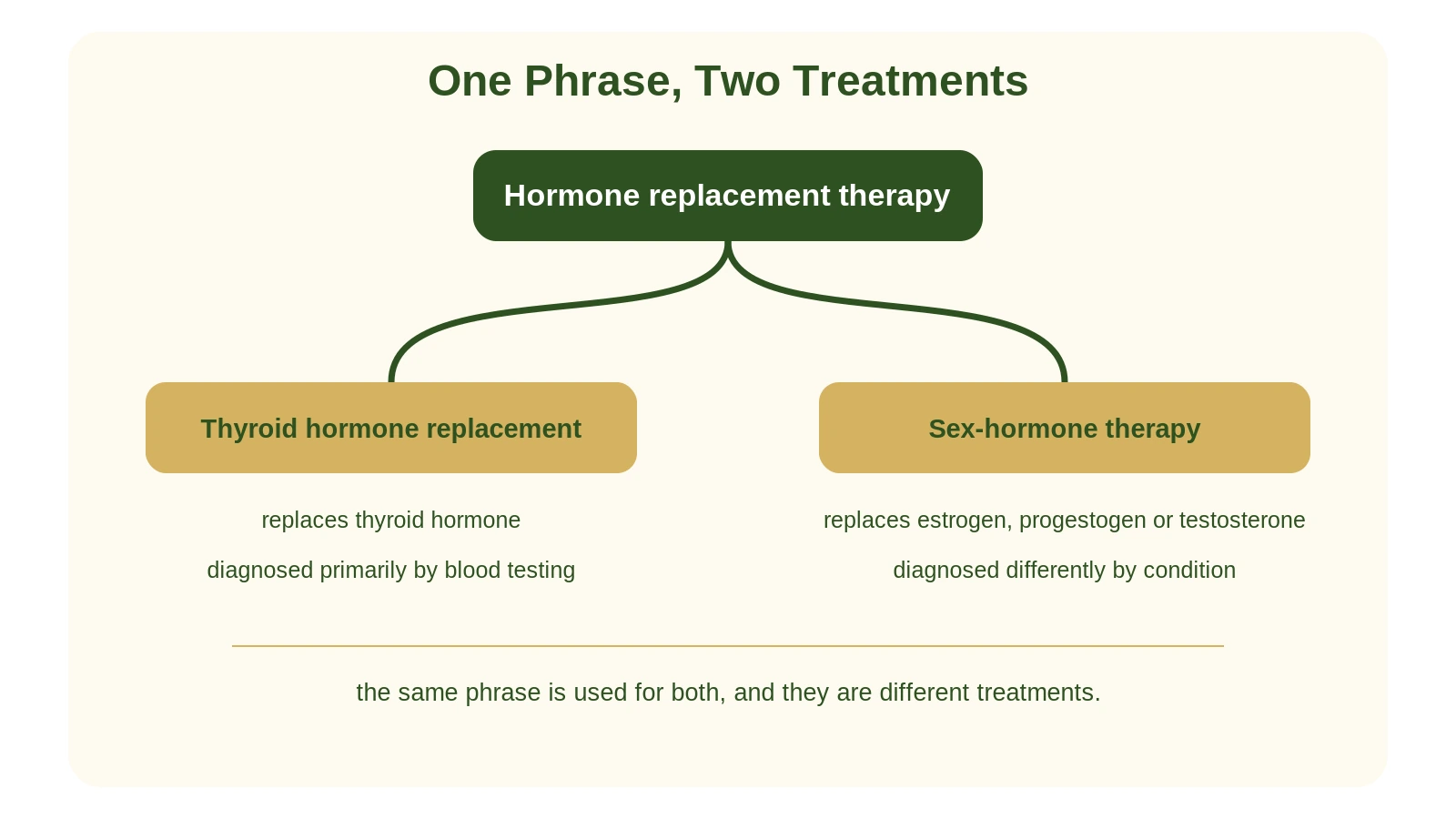
This Is Not the Same as Menopausal HRT or Testosterone Therapy
Worth clearing up first, because the phrase hormone replacement therapy is used for both and they have very little in common.
Comparison Terms | Thyroid hormone replacement | Sex-hormone therapy |
What it replaces | Thyroid hormone, which regulates metabolism throughout the body | Estrogen, progestogen or testosterone |
Why it is given | The thyroid gland is underactive and not producing enough | Varies by condition, and indications are not always explained by falling hormone levels alone |
How it is diagnosed | Blood testing, with TSH usually the initial test | Diagnostic criteria depend on the condition and may include symptoms, history and laboratory findings |
Who typically manages it | Primary care or endocrinology | Gynecology, urology, primary care or hormone-focused services |
Typical duration | Frequently lifelong, since the underlying gland function does not return | Varies considerably, and reassessed over time |
Searching for hormone replacement therapy can return results about either. If you are reading about one and your question concerns the other, the information will not be transferred. They are in different conditions treated by different specialties.
How Hypothyroidism Is Diagnosed
Through blood testing, the testing is more specific than people often expect.
TSH is usually the initial test
For most adults being evaluated for primary hypothyroidism, TSH is the usual initial blood test. Thyroid stimulating hormone is produced by the pituitary gland and rises when the thyroid is underactive, which makes it a sensitive early indicator. Free T4 helps interpret abnormal results and is especially important in certain clinical situations.
A clinician selects and interprets testing based on symptoms, medical history and the possibility of other thyroid or pituitary conditions.
Routine T3 testing is not recommended for most people
Published guidance from the American Thyroid Association indicates that routine T3 testing is not recommended for most patients with hypothyroidism. It has a role in specific situations, which a clinician determines. A panel that includes it is not automatically a more thorough panel.
Symptoms alone do not establish the diagnosis
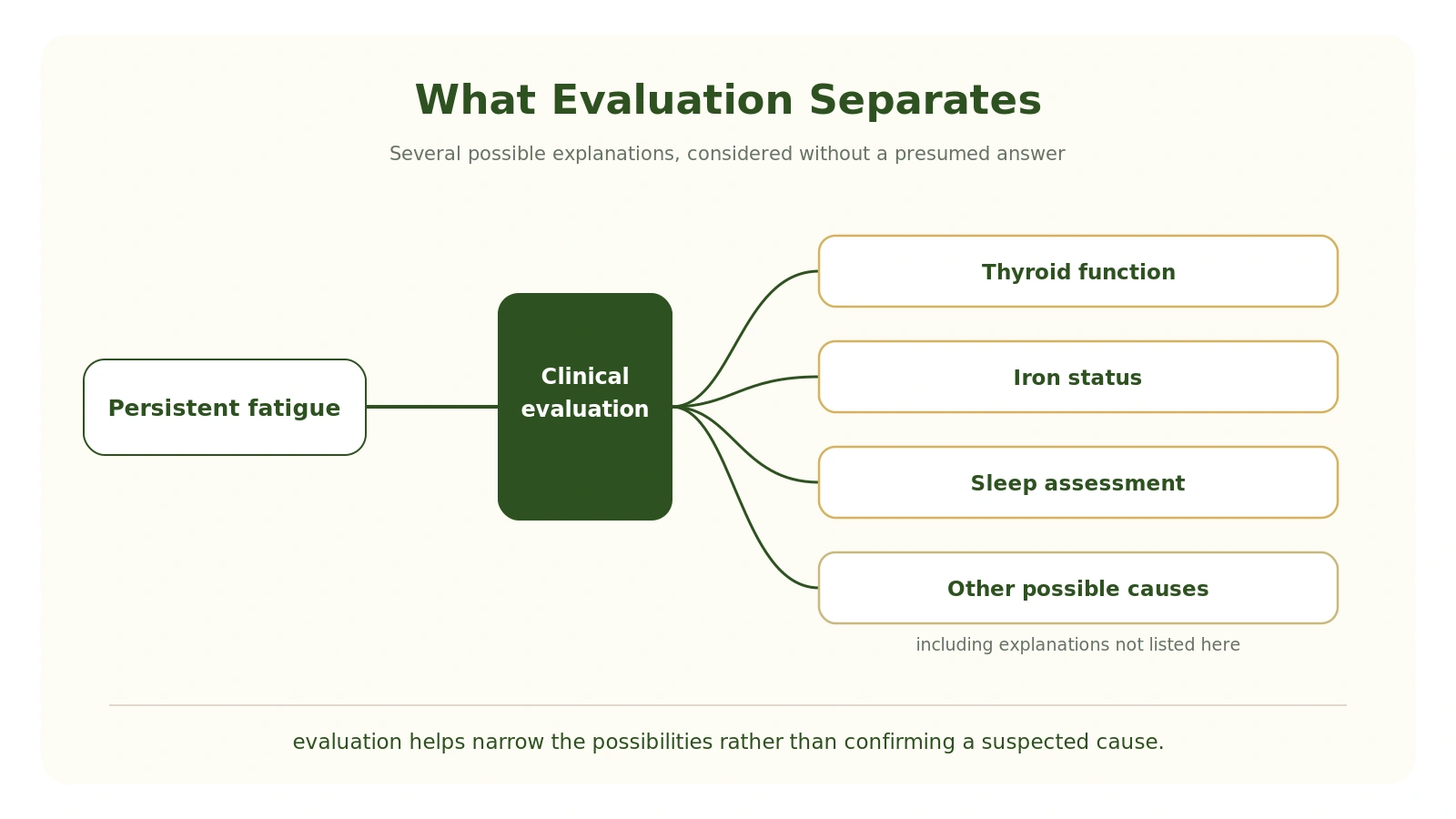
Fatigue, weight gain, feeling cold, dry skin, low mood and difficulty concentrating are all associated with an underactive thyroid. They are also associated with a great many other things, including sleep disruption, iron status, other endocrine conditions, depression and simply being under sustained pressure.
That overlap is the reason testing exists. It separates explanations that look identical from the outside.
Our guide to blood tests before hormone therapy covers what a clinical evaluation typically involves.
What the Standard Treatment Actually Is
This is the part most worth knowing before a consultation, because the local market offers more than one approach.
Published guidance from the American Thyroid Association and the American Association of Clinical Endocrinologists identifies synthetic levothyroxine, a form of T4, as the standard therapy for hypothyroidism. The ATA describes it as safe and effective, and notes that levothyroxine medications are regulated by the FDA for bioavailability, dose equivalence, potency and purity.
What the guidance says about alternatives
Levothyroxine alone is the recommended first-line treatment for most adults with primary hypothyroidism. Desiccated thyroid extract and T4/T3 combination therapy are not routinely recommended as first-line options because evidence has not consistently demonstrated superior outcomes. In selected circumstances, a specialist may consider alternative approaches after reviewing symptoms, laboratory findings, potential risks and the available evidence.
The ATA also notes that desiccated thyroid extract is an animal-derived product whose use predates the current FDA approval process and has stated that while it is not recommended as first-line therapy, it is the treatment of choice for some patients.
None of this means a provider offering an alternative is acting improperly. Guidance describes what is recommended as standard, and clinicians exercise judgment in individual cases. What it does mean is that if you are offered something other than levothyroxine, it is reasonable to ask why that choice suits your situation and what the guidance position is.
Myth and Fact
Commonly believed | What the evidence and guidance indicate |
Persistent tiredness usually means a thyroid problem | Fatigue has many possible causes. An underactive thyroid is one testable explanation among several, and testing is how they are separated |
A natural or desiccated preparation is gentler than a synthetic one | Published guidance identifies synthetic levothyroxine as the standard therapy. Desiccated thyroid extract is animal-derived and its use predates the current FDA approval process |
A thorough panel should always include T3 | Published guidance indicates routine T3 testing is not recommended for most patients with hypothyroidism. Which tests are appropriate is a clinical decision |
Once treatment starts, the problem is solved | Treatment involves ongoing monitoring, since the dose that suits someone can change over time |
If TSH is normal, nothing further is worth discussing | A result within range is one piece of information. Symptoms that remain unexplained are worth continuing to investigate, which may mean looking beyond the thyroid |
Thyroid hormone replacement and menopausal HRT are broadly similar | They treat different conditions, are diagnosed differently and are usually managed by different specialties |
Why More Treatment Is Not Better Here
Thyroid hormone is a medication with effects throughout the body. Taking more than is needed, or taking it when it is not needed, is not a neutral act. Over-replacement carries its own risks, which is why treatment is guided by testing rather than by how someone feels on a given week, and why dose adjustments are made deliberately rather than quickly.
The practical consequence for a reader is that getting treated is not automatically better than being investigated properly. If testing does not support the diagnosis, that is a useful finding rather than a disappointing one, because it redirects attention to whatever is causing the symptoms.
What Treatment Involves Over Time
Useful to understand before starting, because the pattern is different from a short course of medication.
It is taken consistently
Thyroid hormone replacement is taken daily and on a consistent schedule. How and when it is taken can affect absorption, including in relation to food and to certain other medications and supplements, which is why your clinician or pharmacist gives specific instructions. Follow that rather than general advice, since they depend on what else you take.
The dose is arrived at rather than set
A starting dose is chosen based on individual factors, and testing afterwards indicates whether it is appropriate. Adjustments are made deliberately, with repeated testing between changes, because thyroid hormone levels take time to settle and a result taken too early does not reflect where things will land.
Monitoring continues
Testing recurs after treatment is established, more often during any period of change and less often once a regimen is stable. Requirements can also change over time, which is one of the reasons monitoring continues rather than stopping once someone feels well.
Feeling better is not the only measure
Symptoms matter and so do the test results, and the two do not always move together. Someone can feel improved before results reflect it or feel unchanged while results have normalized. Both situations are worth discussing rather than resolving alone.
When to See a doctor
Fatigue can have many causes. Consider discussing it with a clinician when:
Tiredness has persisted for several weeks or months and has not improved with adequate sleep
It is accompanied by other changes, such as unexplained weight change, feeling cold when others do not, dry skin or hair changes
There is a family history of thyroid conditions, which raises the relevance of testing
You have another autoimmune condition, since these can occur together
You are pregnant or planning pregnancy, since thyroid function has particular importance then
You are already taking thyroid medication and your symptoms have changed
Seek medical attention promptly rather than waiting if you experience chest pain, a markedly irregular or rapid heartbeat, severe shortness of breath, or confusion. These are not symptoms to investigate through an article.
Thyroid Care in San Antonio
In San Antonio, thyroid conditions are managed across several settings: primary care, endocrinology practices, hospital systems, and hormone-focused clinics. Where someone is best seen depends on the complexity of their situation.
Questions worth asking
Which tests are you ordering, and what will each one tell us
If treatment is indicated, which preparation would you suggest and why that one
Is what you are proposing, the standard first-line therapy, and if not, what makes it suitable here
How often will you monitor, and what would prompt a dose change
If the results do not explain my symptoms, what would we look at next
Asking whether a proposed treatment is first line can help clarify the clinical reasoning.
Where THRYVE fits
THRYVE Wellness Clinic is a provider-led telehealth service with mobile phlebotomy, offering access to 300+ lab tests, with at-home blood collection available in supported San Antonio service areas. For someone whose first step is finding out whether their thyroid function is normal, laboratory testing arranged without a trip to a collection site may be useful.
Frequently Asked Questions
Where can I find a thyroid specialist in San Antonio?
Thyroid conditions are managed by endocrinologists and, commonly, by primary care clinicians, since uncomplicated hypothyroidism is frequently managed in primary care. Referral to endocrinology is usual where the situation is more complex, including during pregnancy, where there is a nodule or structural concern, or where symptoms persist despite treatment. Asking your primary care provider whether referral is appropriate is a reasonable starting point.
What type of doctor is best for hormone replacement therapy?
It depends which hormone. Thyroid conditions are managed by primary care or endocrinology. Menopausal hormone therapy is commonly managed by gynecology, primary care or menopause-focused services. Testosterone therapy is commonly managed by urology, men's health services or primary care. The phrase covers several different treatments, which is why the answer varies.
How much does thyroid hormone replacement cost?
Generic levothyroxine is among the more widely prescribed medications in the United States and is generally inexpensive compared with many other treatments, particularly where insurance applies. The fuller cost picture includes the initial evaluation, laboratory testing and ongoing monitoring. Our guide to hormone replacement therapy costs covers what drives variation in quoted figures.
Can hormone replacement therapy affect thyroid function?
This question appears frequently in searches and concerns an interaction between two different treatments. Some medications and conditions can affect thyroid test results or thyroid hormone requirements. Whether that applies in an individual case is something to raise with the clinician managing your care, particularly if you take thyroid medication and are starting or changing any other treatment.
How long does it take to feel better after starting treatment?
It varies, and it is generally not immediate. Thyroid hormone levels adjust gradually, and testing is typically repeated after a period to assess whether the dose is appropriate before any change is considered. Your clinician can tell you what to expect and when they plan to re-test.
Final Thoughts
Thyroid hormone replacement treats a specific, testable condition. It is a different treatment from the sex-hormone therapies that share the same general name, and conflating them leads people to the wrong information.
Published guidance identifies synthetic levothyroxine as the standard therapy, and alternatives exist that guidance does not recommend as first-line. If you are offered one, it is reasonable to ask why.
And persistent unexplained fatigue is worth investigating, with the understanding that the purpose is to find the cause. Normal thyroid results may help narrow the investigation, depending on the clinical context.
Laboratory Testing in San Antonio
THRYVE Wellness Clinic provides provider-led telehealth and mobile phlebotomy in supported San Antonio service areas, with access to 300+ lab tests and at-home blood collection where available and appropriate for the tests ordered.