

THRYVE Team
Wellness Clinic
Hormone pellet therapy is often discussed in terms of convenience and long-lasting delivery. But release duration, measured hormone levels and symptom response are different considerations, and published findings vary by preparation. Here's what to know about duration, insertion, aftercare and treatment costs.
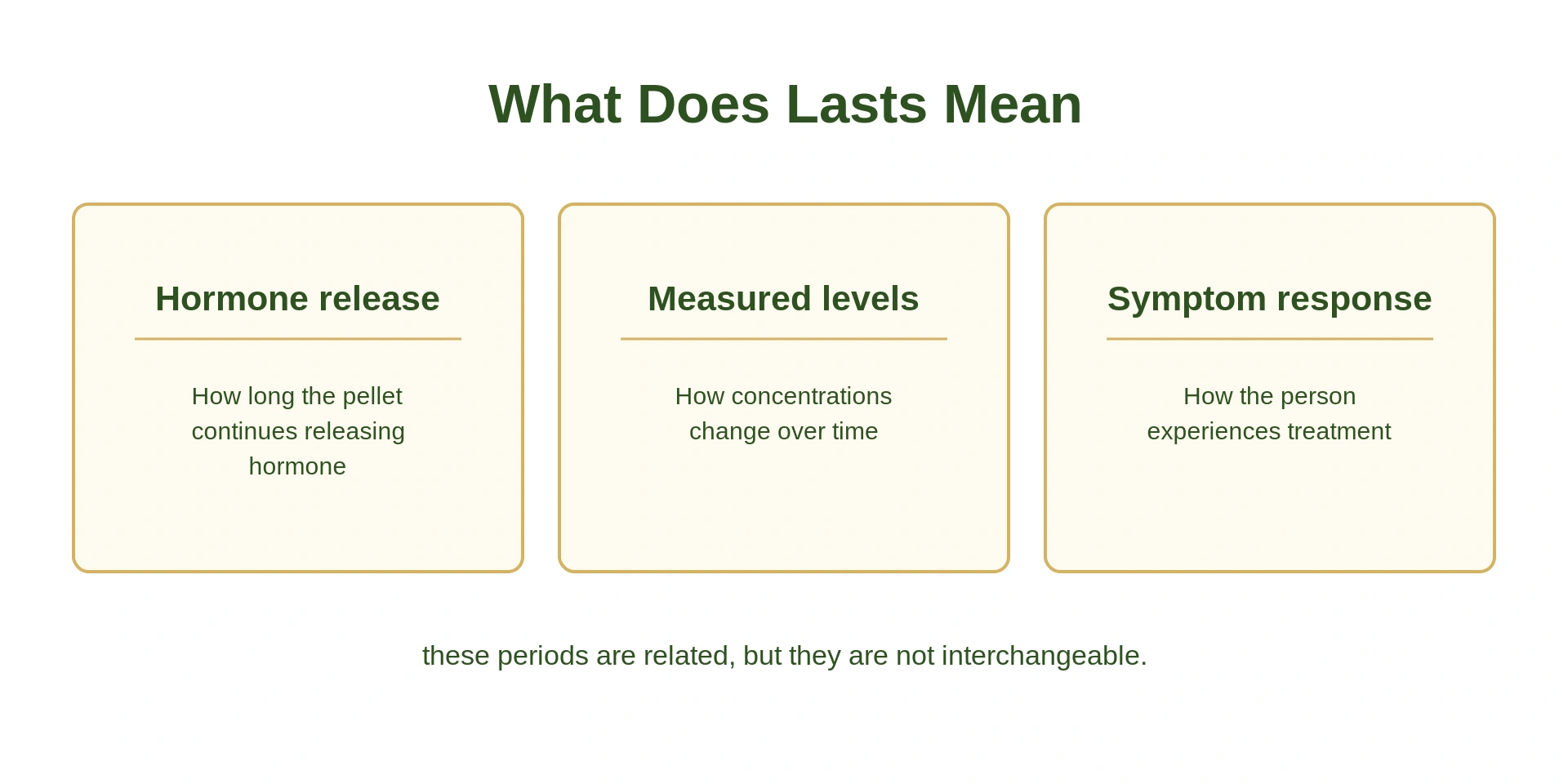
Hormone pellet therapy uses small implants, roughly the size of a grain of rice, inserted under the skin to release estradiol, testosterone or both over several months. Published pharmacokinetic findings differ between preparations, so sustained release does not necessarily mean identical blood concentrations throughout. How long a pellet continues releasing hormones, what concentrations are measured, and how long symptoms remain controlled are three related but separate questions.
Most pages about pellets cover convenience and the absence of a daily routine. Fewer distinguish between how long a pellet releases hormone and how long someone experiences the effect they are seeking, which are not the same question.
This covers what pellets are, how long they last on both definitions, insertion and aftercare, what they cost, and what the evidence supports.
What Are Hormone Pellets?
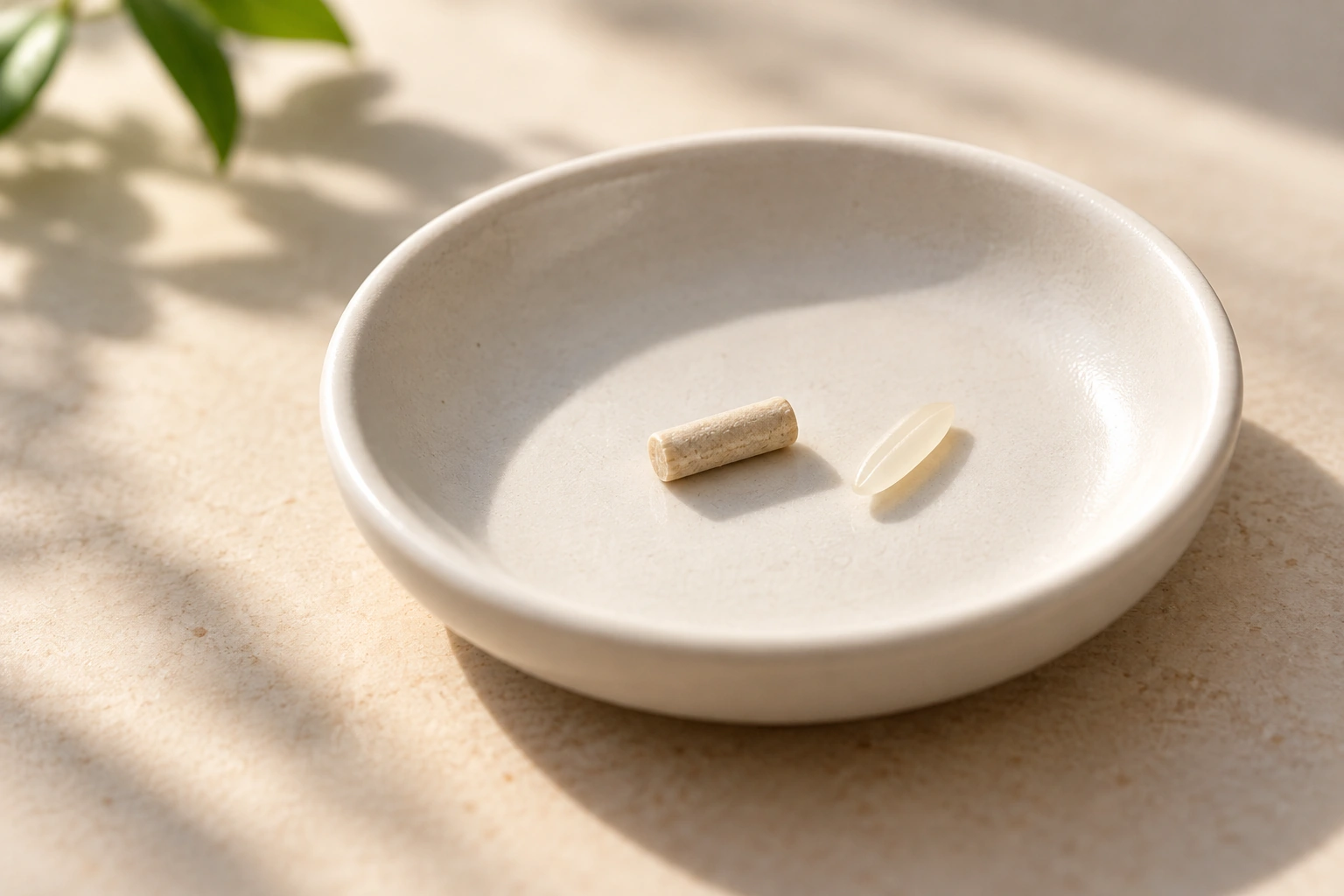
Hormone pellets are small, solid implants, commonly described as about the size of a grain of rice, inserted under the skin during a short in-office procedure. They contain estradiol, testosterone or both, and release hormone into the bloodstream over a period of months.
The route bypasses first-pass liver metabolism, which is the same characteristic that distinguishes transdermal delivery from oral. Published reviews note that subcutaneous implants have been in documented use since the 1940s, making this one of the older delivery routes rather than a recent innovation.
One distinction matters before anything else. Some pellet preparations are compounded rather than FDA-approved manufactured products, and that affects what testing and regulatory oversight the specific preparation has been subject to. Our guide to what bioidentical means covers that distinction in detail, and it is separate from the questions about duration and levels covered here.
How Long Do Hormone Pellets Last?
This is the most searched question about pellets, and it has two answers that are frequently merged into one.
The release period
Pellets are generally described as releasing hormones over three to six months, with testosterone pellets commonly described at the longer end of that range. This is the figure most often quoted, and it describes how long the implant continues to release anything at all.
The therapeutic period
One published estradiol pellet study illustrates why the release period and measured hormone concentrations should be considered separately. Its findings are discussed below, but they should not be generalized to every pellet preparation.
A pellet may continue releasing hormone after concentrations have declined from earlier levels, but the relationship between release duration, measured hormone levels and symptom control varies by hormone, formulation, dose and individual response. In one published study of a 25 mg estradiol pellet, concentrations were reported between 50 and 70 pg/mL for approximately three months, followed by a decline that remained above baseline for up to six months. Other studies have reported different concentration patterns. These findings should not be interpreted as a universal three-month therapeutic window.
Symptoms returning at any point during a cycle warrant clinical assessment rather than being attributed to the calendar. The cause cannot be established from elapsed time alone.
There is no single estradiol concentration that defines successful treatment for every patient. Laboratory results may be relevant in selected circumstances, but they must be interpreted alongside symptoms, the preparation used, treatment timing and the clinician's assessment. A reported concentration range from one study should not be treated as an individual treatment target.
What Actually Happens to Hormone Levels
Hormone pellets are often described as providing sustained delivery, but sustained release does not necessarily mean identical blood concentrations throughout the treatment period.
Published pharmacokinetic findings differ between estradiol and testosterone preparations. Some testosterone pellet studies, particularly in women, have reported early concentrations above the normal physiological range and substantial variation between individuals. Estradiol pellet studies have described several different absorption and concentration patterns.
For this reason, it is more accurate to discuss the specific hormone and preparation than to describe all pellets as following one fixed curve. Asking which preparation is proposed, and what is known about its concentration pattern, is more useful than asking about pellets in general.
Published safety discussions note that concerns including unscheduled bleeding, tachyphylaxis and supraphysiologic levels are mainly associated with excessive dosing, premature reimplantation, or absent endometrial protection in women with a uterus. These are circumstances rather than inevitabilities, which is why monitoring and dosing decisions matter more here than with methods that can be adjusted mid-course.
One Number Worth Knowing
In a large retrospective study involving 376,254 patients treated within a particular pellet-therapy network, 43 percent did not continue after the initial insertion. Among patients who completed two insertions, the reported continuation rate was 93.3 percent.
The study did not establish why patients discontinued treatment. These figures describe the observed continuation pattern in that dataset, not the likelihood that an individual patient will benefit from or tolerate pellets. They should not be interpreted as a measure of treatment effectiveness or satisfaction.
The figure is included because it is a large dataset and because continuation patterns are rarely discussed on pages describing this treatment. What it supports is asking a provider what their own continuation experience looks like, rather than drawing any conclusion about an individual outcome.
How Are Pellets Inserted?
Insertion is a short in-office procedure. The specifics, including site, technique and local anesthetic, are determined by the clinician performing it and vary between practices, so your provider's instructions are the authority rather than general description.
What is broadly consistent: the pellet is placed subcutaneously, commonly in the upper buttock or hip area, through a small incision that is closed with adhesive strips rather than sutures. The procedure itself typically takes a few minutes.
This article provides a general overview rather than procedural instructions. Questions about the insertion technique, safety precautions or individual circumstances should be discussed directly with the clinician performing the procedure.
When Can You Exercise After Pellet Insertion?
One of the most searched practical questions about pellets, and one most clinic pages omit entirely.
Post-insertion activity restrictions are set by the clinician performing the procedure and vary between practices. Instructions may address strenuous activity, swimming, submersion and wound care while the insertion site heals. The specific restrictions and their duration should come from the clinician who performed the procedure.
Ask for the activity instructions before the appointment rather than afterwards. If you train regularly, swim, or have something scheduled in the days following, that is worth raising at booking so the timing can be planned rather than discovered.
If the site becomes red, swollen, painful or discharges, or if the pellet appears to be working its way out, contact the practice that performed the insertion. These are reasons to make contact rather than to wait and see.
What Affects Hormone Pellet Therapy Costs?
Updated October 2026.
This section explains what drives the total rather than quoting a figure, because advertised prices change and because what each quoted figure includes varies substantially between providers. Several components make up the cost:
The insertion procedure itself, which may be billed separately from the product
The pellets, which vary by preparation and by whether they are compounded or FDA-approved
Consultations, both initial and follow-up
Laboratory testing, before insertion and during treatment
Reinsertion frequency, which drives the annual total more than any single figure
Whether any component can be billed to insurance, which requires verifying with both the provider and the plan
Delivery option | How it is typically billed | Practical trade-offs |
Pellets | Procedure and product charges; packages vary | Long-acting; dose cannot readily be adjusted after insertion |
Patches | Prescription-based; cost varies by product and plan | Application schedule and available formulations depend on the prescribed hormone |
Oral formulations | Prescription-based; cost varies | Daily administration; not interchangeable across all hormone indications |
Injections | Prescription and possible administration charges | Dosing interval and monitoring depend on formulation |
This is a general comparison of billing and administration considerations, not a list of interchangeable treatments. Availability, approved indications, safety considerations and insurance coverage differ by hormone and formulation.
Our guide to what lab testing costs covers why the testing component varies so widely between providers.

What the Guidance Says
Two professional positions are relevant and both concern compounded preparations specifically.
In its clinical consensus on compounded bioidentical menopausal hormone therapy, the American College of Obstetricians and Gynecologists advises against routine use of compounded preparations when FDA-approved menopausal hormone therapies are available.
For testosterone treatment in this menopausal context, ACOG recommends delivery methods other than pellets because of limited safety data and the difficulty of removing an implanted pellet.
These recommendations address a defined clinical context and should not be presented as a blanket assessment of every hormone pellet formulation or every patient population.
The Menopause Society has also published a position statement on hormone therapy. Its exact edition and the specific adverse effects it names should be verified before any detail is reproduced here.
Published evidence grading for compounded pellets describes the quality of evidence as low, drawn largely from observational studies and a small number of small randomized trials. That is a statement about the evidence base rather than about whether individual people benefit.
Hormone Pellet Therapy in San Antonio
People researching hormone pellet therapy in San Antonio may encounter providers offering different pellet preparations, monitoring arrangements and pricing structures. Comparing these details can help clarify what each advertised program includes.
Questions worth asking any provider here
Is the preparation FDA-approved or compounded, and which specific product
How many insertions does the quoted price assume, and what else does it include
What monitoring happens, when in the cycle, and is it included
What are the activity restrictions after insertion, and for how long
What happens if symptoms return before the next insertion is due
The last question is the practical form of this article's main point. Asking what happens if symptoms change before the next insertion helps clarify the provider's approach to reassessment, monitoring and follow-up.
A practical point about testing
Pellet therapy involves laboratory testing before insertion and periodically afterward, with timing relative to the insertion affecting what a result shows. In supported San Antonio service areas, at-home blood collection may be available when appropriate for the tests ordered, with consultations and results review delivered through secure telehealth. Availability depends on the test ordered, the collection address and current service coverage.
Frequently Asked Questions
How long do hormone pellets last?
Pellets are generally described as releasing hormone over three to six months, and the figure varies by hormone, preparation and dose. Published studies report different concentration patterns, so a quoted duration describes release rather than a guaranteed period of symptom control. Ask your provider what a quoted duration refers to, and what the plan is if symptoms change before the next insertion is due.
Are hormone pellets safe?
Hormone pellet therapy has potential risks, including excessive hormone exposure and treatment-related adverse effects. The risks depend on the hormone, preparation, dose and individual clinical circumstances. ACOG advises against routine use of compounded menopausal hormone therapy when FDA-approved options are available and recommends alternatives to testosterone pellets in that context. Whether a particular treatment is appropriate requires individualized medical evaluation.
Does insurance cover hormone pellets?
Coverage varies by plan and by preparation. Compounded preparations are less commonly covered than FDA-approved products, and the insertion procedure, the pellets and the laboratory testing may each be treated differently by the same plan. Ask which specific components a provider can bill and verify with your insurer directly.
What happens when the pellet runs out?
Pellets dissolve and are absorbed rather than needing removal at the end of a cycle. As hormone release declines, some people may notice changes in symptoms, while others may not. The timing and cause of returning symptoms should be discussed with the treating clinician rather than assumed to follow a fixed reinsertion schedule.
Can hormone pellets be adjusted after insertion?
Unlike some shorter-acting hormone formulations, an implanted pellet cannot readily be adjusted once inserted. This makes the initial prescribing decision, the specific preparation, monitoring and follow-up plan particularly important. Patients should discuss how unexpected effects would be managed before starting treatment.
Final Thoughts
Pellets remove a daily or weekly routine, which is a real benefit for people who find that routine the obstacle. They also commit you to a dose for months, because an implanted pellet cannot readily be adjusted once it is in place.
How long a pellet releases hormones, what concentrations are measured, and how long symptoms stay controlled are three related but separate questions. Published findings differ between preparations, which is why the useful conversation is about the specific preparation proposed rather than about pellets in general.
This leads to three practical questions for a consultation: Which preparation is being considered? What monitoring is planned? And what happens if treatment needs change before the next insertion?
Hormone Evaluation and Telehealth Support in San Antonio
If you are researching hormone pellet therapy in San Antonio, understanding the available treatment options, potential risks and monitoring requirements is an important starting point.
THRYVE provides provider-guided hormone evaluation and telehealth services in supported areas, with at-home blood collection where available and appropriate for the tests ordered.
Contact THRYVE to learn more about available hormone evaluation and telehealth services. Treatment recommendations depend on an individual clinical assessment.