

THRYVE Team
Wellness Clinic
Learn what clinical trials report about tirzepatide side effects, including nausea and diarrhea, when gastrointestinal effects tend to occur, how long they may last, and when symptoms deserve medical attention.

The most commonly reported tirzepatide side effects are gastrointestinal, including nausea, vomiting, diarrhea, constipation, indigestion, and reduced appetite. In clinical trials, these effects were generally mild to moderate and occurred most often during dose escalation rather than evenly throughout treatment.
Two things are usually missing from conversations about the side effects of tirzepatide before treatment begins. The first is a clear sense of when gastrointestinal effects are most likely to appear and when they may ease. The second is knowing when an unpleasant side effect has crossed the line into something that deserves medical attention.
This guide covers both. It looks at what clinical trials reported, why tirzepatide can cause gastrointestinal effects, how their timing may relate to dose escalation, and what the evidence can and cannot tell us about long-term effects and comparisons with semaglutide.
What the Trials Reported
A systematic review and meta-analysis of six randomized controlled trials involving 4,586 people with type 2 diabetes provides one useful estimate of gastrointestinal side-effect frequency.
Effect | Tirzepatide | Comparators in the same trials |
|---|---|---|
Nausea | 20.43% | 10.47% |
Vomiting | 9.05% | 4.86% |
Other gastrointestinal effects reported across the trial program included:
Diarrhea
Constipation
Dyspepsia or indigestion
Decreased appetite
These percentages need context. The analysis involved people with type 2 diabetes and combined studies using different comparators, so the percentages should not be treated as a prediction of what every person taking tirzepatide will experience.
Still, they provide useful perspective. Roughly one in five participants in this analysis reported nausea, meaning most did not.
That distinction matters. A list of possible side effects tells you what can happen. It does not tell you what will happen to an individual.
Why Does Tirzepatide Cause Nausea?
Tirzepatide affects gastrointestinal function as part of its pharmacologic activity.
It acts on both glucose-dependent insulinotropic polypeptide (GIP) and glucagon-like peptide-1 (GLP-1) receptors. Its GLP-1 activity can slow gastric emptying, particularly earlier in treatment, while its effects on appetite and satiety involve multiple pathways.
These changes can contribute to gastrointestinal symptoms such as nausea.
Gastrointestinal effects can also become more noticeable as doses increase, which is one reason tirzepatide is introduced through a gradual dose-escalation schedule rather than beginning immediately at a higher maintenance dose.
The important point is that nausea is a recognized effect of treatment, but its intensity, duration, and timing can vary considerably from person to person.
How Long Do Tirzepatide Side Effects Last?
This is one of the questions people most want answered, but there is no universal timeline.
Pooled analyses of the SURPASS clinical trial program found that gastrointestinal effects occurred most often during dose escalation and generally decreased afterward.
That means side effects do not necessarily remain at the same intensity throughout treatment.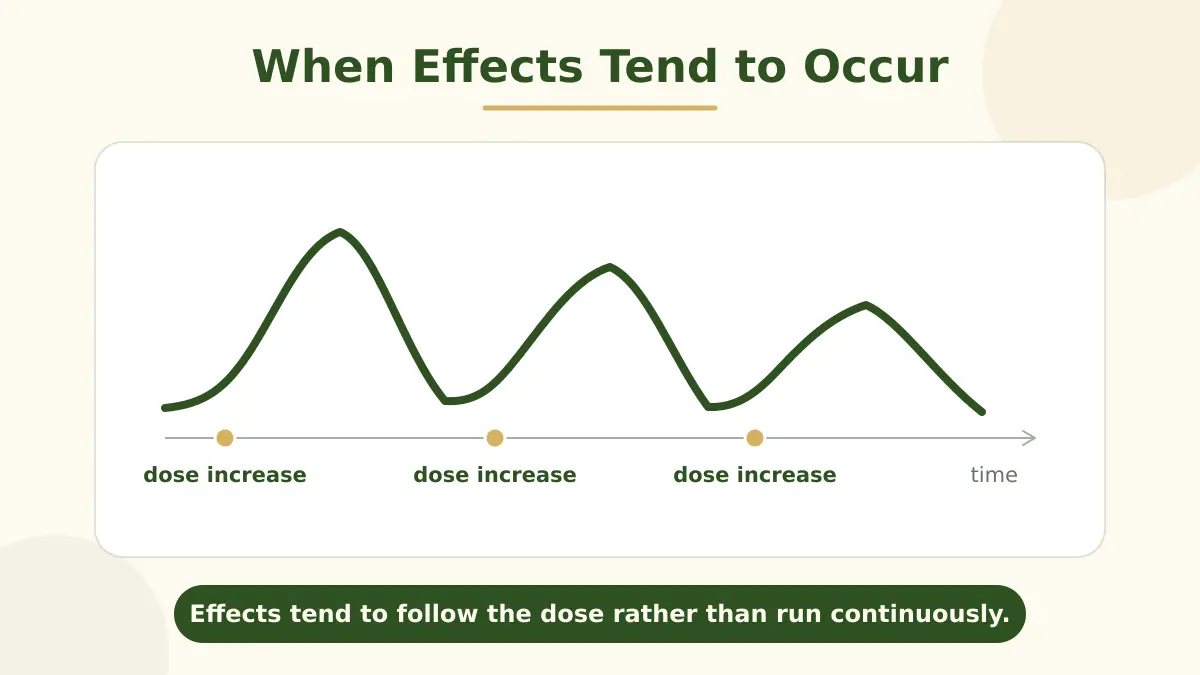
A simplified pattern can look like this:
Stage | What may happen |
|---|---|
Treatment begins | Gastrointestinal effects may appear during the first weeks |
Remaining at one dose | Effects may ease as the body adjusts |
Dose increases | Effects may return or become more noticeable |
Remaining at the new dose | Effects may ease again |
Maintenance treatment | Many gastrointestinal events reported in trials had already occurred during escalation |
This pattern helps explain an experience that can otherwise be confusing.
Someone may begin treatment, experience gastrointestinal symptoms, feel better after remaining at the same dose, and then notice symptoms again following a later dose increase.
Feeling better and then experiencing gastrointestinal effects again can occur around a dose increase and does not necessarily mean treatment has stopped working. New, severe, or persistent symptoms should still be discussed with a healthcare provider.
Individual experiences vary substantially. Some people experience few gastrointestinal effects, while others experience symptoms outside this general pattern.
Trial averages describe populations. They do not provide a personal timeline.
Diarrhea on Tirzepatide: How Long Does It Last?
Diarrhea is consistently reported in the tirzepatide trial literature as one of the more common gastrointestinal effects, alongside nausea and vomiting.
So, how long does diarrhea on tirzepatide last?
There is no single duration that applies to everyone.
Clinical trial data suggest that gastrointestinal effects tend to occur more frequently during dose escalation and may ease after someone has remained at a stable dose. But duration can differ depending on the individual and where they are in treatment.
This distinction is important because temporary gastrointestinal discomfort and persistent or severe symptoms are not the same situation.
Do not assume that diarrhea or other gastrointestinal symptoms should simply be waited out because they are known side effects. Symptoms that are severe, persistent, or occur alongside other concerning symptoms should be discussed promptly with a healthcare provider.
When Gastrointestinal Effects Become a Safety Issue
Most gastrointestinal effects reported in tirzepatide trials were mild to moderate. But prolonged vomiting or diarrhea can lead to fluid and electrolyte loss.
Published medical case reports have described uncommon situations in which severe gastrointestinal symptoms associated with tirzepatide were followed by significant dehydration or electrolyte disturbances.
A case report does not establish how frequently an event occurs and should not be interpreted as a typical outcome. It does, however, illustrate why persistent gastrointestinal symptoms deserve attention.
Contact a healthcare provider promptly if you experience:
Persistent vomiting
Ongoing or severe diarrhea
Signs of dehydration
An inability to keep fluids down
Severe abdominal pain
Other new or concerning symptoms your healthcare provider has advised you to treat as urgent
The important distinction is not simply whether a gastrointestinal symptom exists. It is its severity, persistence, and effect on hydration or overall health.
Clinical review required: THRYVE’s reviewing clinician should approve the final symptom list and urgency language before publication.
How Tirzepatide Side Effects Compare With Semaglutide
People considering these medications often want to know whether tirzepatide side effects are worse than semaglutide side effects.
Directly comparing side-effect percentages across separate tirzepatide and semaglutide trials requires caution.
Different trials can enroll different populations, use different doses, define adverse events differently, and follow participants for different lengths of time. A nausea percentage from one semaglutide obesity trial therefore cannot simply be placed beside a percentage from an unrelated tirzepatide diabetes trial and treated as a controlled comparison.
There is head-to-head evidence, but that evidence also needs context.
SURPASS-2 compared tirzepatide with semaglutide 1 mg in adults with type 2 diabetes. It did not compare tirzepatide with every semaglutide dose used across different indications.
That limits how far its tolerability findings should be generalized.
Preclinical research has also investigated whether GIP receptor activity might influence nausea associated with GLP-1 receptor activation. That work is mechanistically interesting, but it includes animal-model evidence and should not be interpreted as proof that tirzepatide is better tolerated in humans.
For a broader comparison of how the two medications work and what direct comparative trials found, read our guide to tirzepatide vs. semaglutide.
Tirzepatide Long-Term Side Effects
Questions about tirzepatide long-term side effects are harder to answer with the same certainty as common short-term gastrointestinal effects.
Tirzepatide is a relatively recent medication, which means the evidence base for several years of continuous treatment is less mature than it is for medications that have been used for decades.
Current knowledge comes from clinical trials, longer-term extensions, regulatory safety information, and ongoing post-marketing surveillance.
The FDA-approved prescribing information for tirzepatide products includes important warnings and precautions. These include a boxed warning concerning thyroid C-cell tumors observed in animal studies, as well as additional safety considerations that can affect whether treatment is appropriate for a particular person.
Tirzepatide also delays gastric emptying, and current prescribing information contains relevant precautions for patients with significant gastrointestinal disease.
What this means for an individual cannot be determined from an online list of side effects. Medical history, other medications, current symptoms, treatment indication, and other risk factors all matter.
Longer-term safety continues to be monitored as tirzepatide is used in larger populations and over longer periods.
That is not a reason for alarm or reassurance by itself. It is simply an important limitation of the available evidence.
What Can Help With Gastrointestinal Side Effects?
General measures used to support gastrointestinal tolerability may include:
Eating smaller portions rather than larger meals
Stopping eating when comfortably full
Maintaining adequate fluid intake
These are general considerations, not individualized treatment instructions. If gastrointestinal effects are difficult to tolerate, a prescriber may also consider whether the treatment or dose-escalation schedule needs to be reassessed.
Do not reduce, skip, increase, pause, or stop doses on your own. Changes to medication dosing should be discussed with the healthcare provider managing your treatment.
Frequently Asked Questions
What are the most common side effects of tirzepatide?
The most commonly reported tirzepatide side effects are gastrointestinal. They include nausea, diarrhea, vomiting, constipation, dyspepsia, and decreased appetite. In clinical trials, many gastrointestinal adverse events were mild to moderate, although individual experiences vary.
Why does tirzepatide cause nausea?
Tirzepatide affects gastrointestinal function and can slow gastric emptying as part of its GLP-1 activity. Its effects on appetite and satiety involve multiple pathways. These changes can contribute to nausea, particularly during periods of dose escalation.
How long does diarrhea on tirzepatide last?
There is no single duration that applies to everyone. Clinical trial data suggest gastrointestinal effects occur more frequently during dose escalation and may ease while remaining at a stable dose. Severe or persistent diarrhea should be discussed with a healthcare provider rather than assumed to be temporary.
Do tirzepatide side effects go away?
Many gastrointestinal adverse events reported in clinical trials occurred during dose escalation and decreased afterward. However, this is a population-level pattern rather than a guarantee for an individual. New, severe, or persistent symptoms should be evaluated by a healthcare provider.
Are tirzepatide side effects worse than semaglutide side effects?
There is no simple answer. Comparing percentages across separate trials can be misleading because study populations, doses, follow-up periods, and adverse-event definitions may differ. Head-to-head trials provide stronger comparative evidence, but their findings still apply to the specific populations and doses studied.
Can tirzepatide side effects be dangerous?
Most gastrointestinal adverse events reported in clinical trials were mild to moderate. However, persistent vomiting or diarrhea can contribute to dehydration and electrolyte problems. Severe or persistent symptoms, an inability to keep fluids down, or other concerning symptoms should be discussed promptly with a healthcare provider.
Final Thoughts
The most commonly reported tirzepatide side effects are gastrointestinal, particularly nausea, diarrhea, vomiting, constipation, dyspepsia, and decreased appetite.
Clinical trial evidence suggests that gastrointestinal effects occur most often during dose escalation rather than at a constant level throughout treatment. That helps explain why symptoms may improve at one point and become noticeable again following a later dose increase.
But the pattern is not universal.
The most useful distinction is between a known side effect that remains manageable and symptoms that become severe, persistent, or interfere with hydration and normal functioning. Those situations deserve medical attention rather than an assumption that the symptoms will eventually disappear.
And when comparing tirzepatide with another medication, trial averages are only part of the decision. Individual medical history, treatment goals, tolerability, current medications, and clinical circumstances still matter.
Treatment With Ongoing Provider Contact
THRYVE Wellness Medical provides provider-led medical weight management by telehealth, with follow-up built into treatment rather than left to the patient to arrange. Services are available to eligible patients in Texas, South Carolina, and North Carolina.
Book a consultation with THRYVE
Medical Disclaimer: This article is for general educational purposes and is not a substitute for individualized medical advice, diagnosis, or treatment. Tirzepatide is available by prescription only. Do not start, stop, adjust, or skip doses of any medication based on general information. If you are experiencing symptoms, contact the healthcare provider managing your treatment.