

THRYVE Team
Wellness Clinic
Medically supervised weight loss has changed substantially with GLP-1 medications. What has not changed is that the research on stopping treatment is rarely mentioned by the pages selling it. Here is what medical weight loss involves and what the trials actually found.
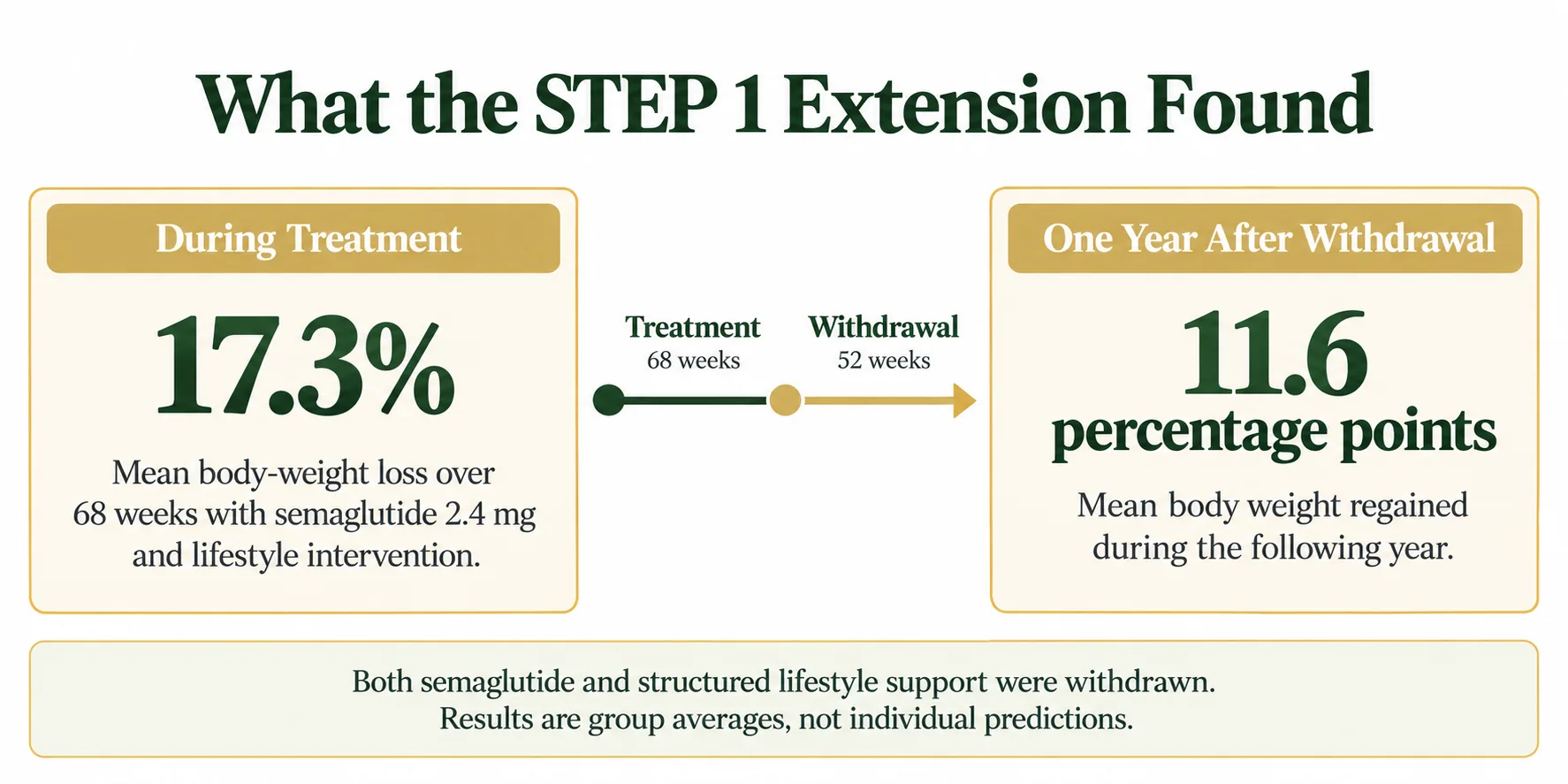
Medical weight loss refers to weight management supervised by a licensed healthcare provider, which may include evaluation, monitoring, behavioral support and prescription medication where appropriate. Clinical trials of GLP-1 medications have shown substantial weight loss during treatment. The STEP 1 trial extension found that one year after semaglutide and structured lifestyle support were withdrawn, participants had regained a mean of two-thirds of the weight they had lost. Whether treatment is appropriate, and for how long, is a clinical decision.
Searching for medical weight loss in San Antonio, TX, brings up providers offering different programs, medications and approaches to ongoing care. Many explain what treatment involves, but information about what happens after treatment stops is equally important when comparing options.

What Is Medical Weight Loss?
Medical weight loss describes weight management delivered under the supervision of a licensed healthcare provider. It is distinguished from commercial weight loss programs by the involvement of a clinician who can evaluate underlying contributors, order and interpret testing, prescribe where appropriate, and monitor over time.
A medically supervised approach typically includes several components rather than a single intervention:
Clinical evaluation, including medical history and factors that may be contributing
Laboratory testing where it informs the clinical picture, such as thyroid function or metabolic markers
A plan that may include nutrition and activity guidance, behavioral support, or prescription medication
Monitoring over time, with adjustment as the picture changes
A discussion about what happens longer term, including maintenance
That last component is the one most variable between providers, and it is the subject of much of this article.
Myths and Facts
Common belief | What the evidence actually supports |
Medical weight loss means getting an injection | Medication is one possible component. Evaluation, monitoring and a maintenance plan are part of what makes it medical rather than commercial |
Faster loss is better | Faster weight loss is not automatically better or more sustainable. The appropriate pace and approach depend on a person's health circumstances, treatment plan and clinical monitoring. Weight maintenance requires planning regardless of how weight loss occurs |
The weight stays off once you have lost it | Trial evidence on GLP-1 withdrawal shows substantial regain, which is covered in detail below. Maintenance is a separate problem from loss |
These medications work the same for everyone | Response varies considerably between individuals, as does tolerability. Trial averages describe groups rather than predicting an individual result |
If it is prescribed it must be appropriate for me | Whether any treatment suits an individual depends on medical history, other conditions and current medications, which is what an evaluation establishes |
A specific amount of weight can be lost in a specific timeframe | Published trial results report group averages over defined periods. They are not targets, and setting a personal rate target is not how clinical weight management works |
This article does not set weight-loss targets, prescribe calorie intake or provide individualized meal plans. If you are experiencing distress around eating, weight or body image, that is worth raising with a healthcare provider directly, and support is available independently of any weight management decision.
Where Can I Get Weight Loss Injections in San Antonio?
San Antonio has several categories of providers offering medically supervised weight management: dedicated weight loss clinics, hospital-affiliated weight management centers, primary care and internal medicine practices, med spas and aesthetic clinics, and telehealth providers. They differ substantially in what is included beyond the prescription, which is the most useful basis for comparison.
Provider type | What the model typically emphasizes | Worth asking about |
Dedicated weight loss clinics | Structured programs, frequently with on-site services | What happens at the end of the program |
Hospital-affiliated centers | Integration with broader medical care | Referral pathways and whether surgical options are discussed |
Primary care and internal medicine | Weight management alongside other conditions | How often review happens |
Med spas and aesthetic clinics | Treatment access, frequently alongside cosmetic services | Which clinician supervises and what evaluation precedes prescribing |
Telehealth with at-home testing | Remote consultation with collection at your address | Which laboratory work is included and how monitoring happens |
The telehealth model is worth examining carefully. Access to prescription and access to ongoing clinical monitoring are not the same thing. Ask who reviews laboratory results, how follow-up is arranged, and what happens when a medication needs to be adjusted or discontinued.
What the Trials Show About Stopping
This is the section most comparable pages omit, and it is the most useful thing on this page.
The STEP 1 trial studied once-weekly semaglutide 2.4 mg alongside lifestyle intervention over 68 weeks, producing a mean weight loss of approximately 17.3 percent of body weight. Its extension phase followed participants for a further year after both the medication and the structured lifestyle support were withdrawn.
One year after withdrawal, participants in the semaglutide arm had regained a mean of 11.6 percentage points of body weight, compared with 1.9 percentage points in the placebo arm. That left a net loss of 5.6 percent from the trial's start, against 0.1 percent for placebo. The published conclusion describes this as regaining a mean of two-thirds of prior weight loss.
Cardiometabolic measures largely tracked the weight. The trial reported that improvements in several risk factors reverted toward baseline alongside the regain, while some lipid measures held longer.
A related randomized trial, STEP 4, found a similar pattern over a shorter period: participants who switched to placebo after an initial treatment phase regained a substantial proportion of what they had lost, while those who continued treatment lost further weight. As with STEP 1, these findings describe participants in a randomized trial rather than predicting what any individual will experience.
What that does and does not establish
It establishes that, in these trials, discontinuation was followed by substantial regain, and that the published conclusion points toward continued treatment being relevant to maintaining the result.
It does not establish what will happen to any individual. Real-world outcomes may differ from those observed in randomized trials because treatment duration, follow-up, ongoing support and patient circumstances vary. These differences should be considered when discussing what may happen after medication is discontinued.
What follows practically is that maintenance is worth discussing with a provider before starting rather than after stopping, since it is the part the trial evidence points at most clearly.
What a Program Should Include Beyond the Prescription
If the research points to maintenance, that is a reasonable basis for comparing providers.
What evaluation happens before anything is prescribed, including which laboratory work and why
How often review occurs once treatment starts, and what is monitored
What the plan is if the medication is not tolerated, which is a common enough scenario to warrant an answer
What happens when treatment ends, and whether that conversation occurs at the start or only at the end
Whether behavioral and nutritional support is included or sold separately
Who supervises clinically, and what their involvement consists Medical Weight Loss in San Antonio of
The fourth question is the one that distinguishes providers most clearly, and it is reasonable to ask it in a first consultation rather than a year in.
Patients comparing programs may also want to understand what lab testing costs and whether testing is included in the quoted program price.
What Is the Most Successful Medication for Weight Loss?
There is no single answer that applies to everyone. Several FDA-approved medications are used for weight management and published trials report different average results for different agents over different periods. Which is appropriate for an individual depends on medical history, other conditions, current medications, tolerability and what the treatment is intended to address. That assessment is what a clinical evaluation is for.
Two things are worth understanding about comparing published results:
Trial results describe averages across groups, over defined durations, in populations selected by the trial's criteria. They do not predict an individual outcome
Different trials use different designs, comparators and durations, so figures quoted side by side are frequently not directly comparable

When to See a doctor
Weight is one part of a broader clinical picture, and several situations warrant medical input rather than a commercial program.
Weight change that is unexplained, rapid or unintentional, in either direction
Weight change is accompanied by other symptoms, such as fatigue, changes in appetite, temperature sensitivity or changes in bowel habit
An existing condition that weight may be affecting, or that may be affecting weight, including thyroid conditions, diabetes, sleep apnea or polycystic ovary syndrome
Taking medications that can affect weight, which is more common than many people realize and worth reviewing rather than assuming
Previous attempts that have not worked, where an evaluation may identify a contributing factor that was not addressed
Considering a prescription medication, which requires evaluation regardless of where it is obtained
Separately, and importantly: if your relationship with food, eating or your body is causing distress, that is a reason to speak with a healthcare provider. It is a different conversation from weight management, and the right support is available independently of any decision about treatment.
Medical Weight Loss in San Antonio
San Antonio has a developed market for this, ranging from dedicated weight loss clinics to hospital-affiliated weight management centers, primary care practices, aesthetic clinics and telehealth providers.
What varies most is not which medications are available. It is what sits around them: what evaluation precedes prescribing, how monitoring happens, and whether maintenance is part of the conversation from the start.
A practical point about testing
Laboratory testing may be recommended during medically supervised weight management when it helps assess underlying conditions, medication safety or treatment progress. The tests and monitoring schedule depend on the individual's clinical circumstances and treatment plan.
In supported San Antonio service areas, Mobile Phlebotomy may be available for at-home blood collection when appropriate for the tests ordered, with consultations and results review delivered through secure telehealth. Availability depends on the test ordered, the collection address and current service coverage.
What Affects Whether Treatment Is Appropriate
Several factors determine suitability, and none of them is a number on a scale alone.
Medical history and current conditions
Existing conditions can affect which approaches are suitable and which are not. Some conditions also contribute to weight in ways that are addressable directly, which is part of what an evaluation establishes rather than something to assume either way.
Current medications
A few commonly prescribed medications can affect weight. Reviewing what someone is already taking is a standard part of evaluation, and it occasionally identifies a contributor that had not been considered.
Previous attempts and what happened
What has been tried before, and what the pattern was afterward, is clinically informative. A history of loss followed by regain is common and is information rather than a failure, and it is directly relevant to how maintenance should be planned.
Tolerability
Medications in this category have side effect profiles that some people tolerate well and others do not. Discontinuation for tolerability reasons is common enough that a provider should have an answer for what happens in that case.
What the treatment is intended to address
Weight management may be pursued for different reasons, including managing a specific condition. Those reasons affect what success looks like and how long treatment continues, which is worth establishing at the start.
Frequently Asked Questions
What is medical weight loss?
Weight management supervised by a licensed healthcare provider, which may include clinical evaluation, laboratory testing, behavioral and nutritional support, prescription medication where appropriate, and monitoring over time. The supervision and the evaluation are what distinguish it from a commercial program.
Do you regain weight after stopping GLP-1 medication?
Trial evidence shows substantial regain after discontinuation. The STEP 1 extension found participants regained a mean of two-thirds of their lost weight within a year of withdrawing both the medication and structured lifestyle support. Those findings describe trial participants rather than predicting any individual outcome, and real-world circumstances differ. Maintenance is worth discussing with a provider before starting rather than after stopping.
Does insurance cover medical weight loss?
Coverage varies considerably by health plan and by what is being billed. Consultations, laboratory testing and medication may each be treated differently by the same plan, and some medications have specific coverage criteria. Ask which components a given provider can bill and verify with your insurer directly.
How long does medically supervised weight management last?
It varies by individual and by approach. The trial evidence on discontinuation is relevant here: published conclusions point toward continued treatment being relevant to maintaining results, which makes duration a clinical question worth raising at the start rather than an administrative detail.
Final Thoughts
Medical weight loss means supervision, evaluation and monitoring rather than access to a particular medication. The medications available now produce results in trials that earlier options did not.
The same trials also found that stopping was followed by substantial regain, and that cardiometabolic improvements largely tracked the weight. Real-world experience appears more varied, which is worth knowing in both directions.
Which asks the useful question at a first consultation not what can I lose, but what happens afterwards, and does this provider have an answer to that before I start.
Provider-Led Care in San Antonio
THRYVE Wellness Clinic provides provider-guided evaluation in supported San Antonio service areas, with at-home blood collection where available and care delivered through secure telehealth.