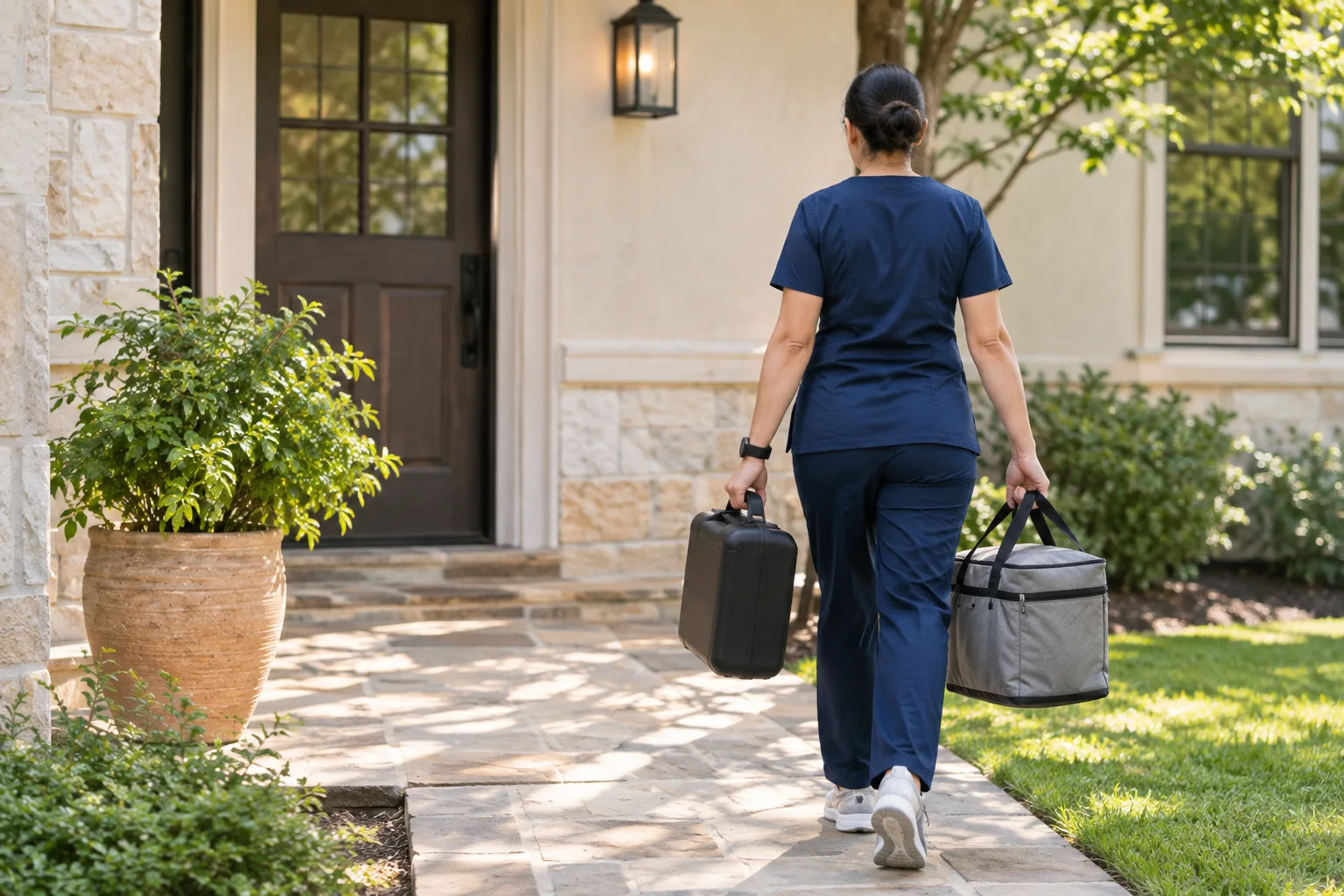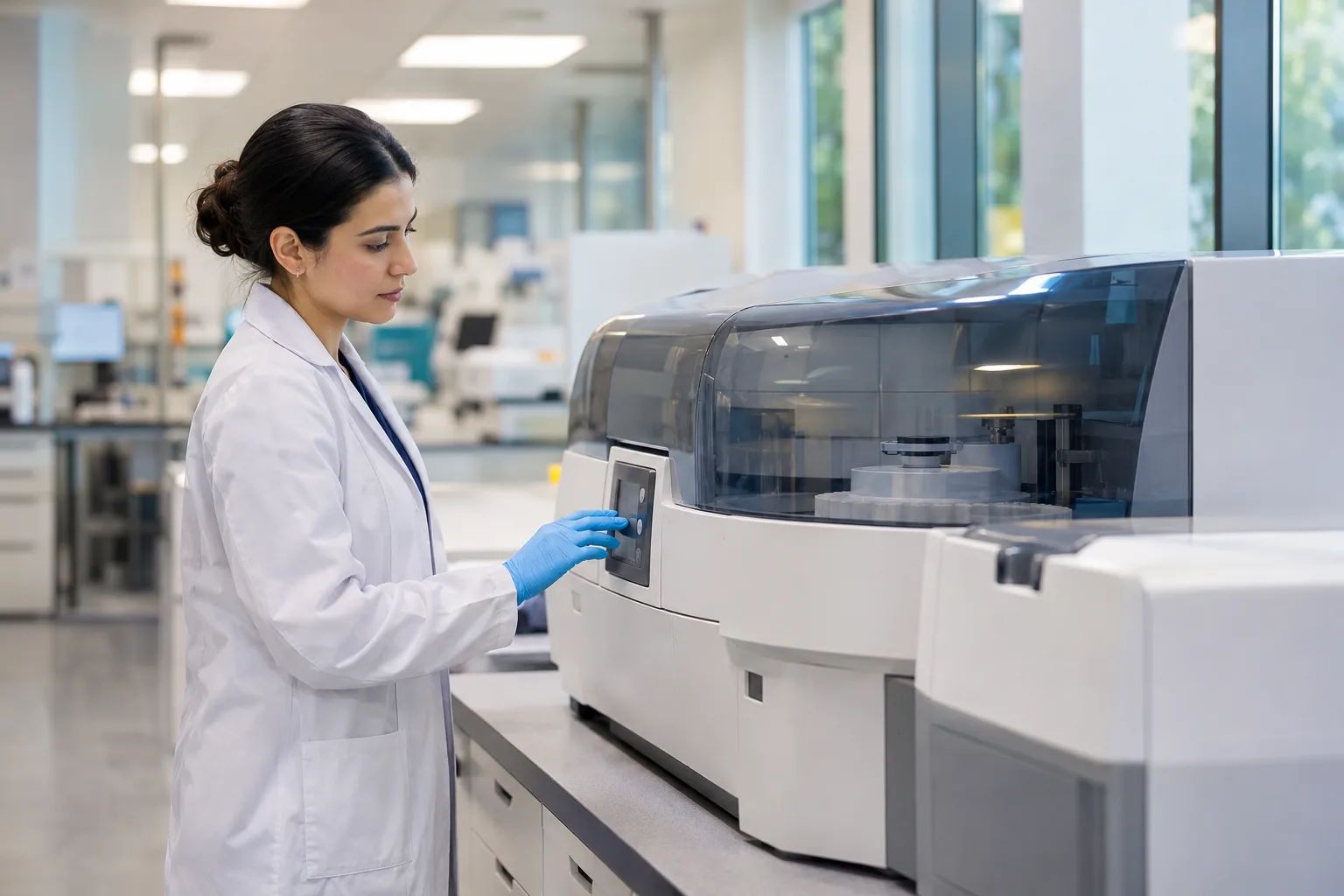
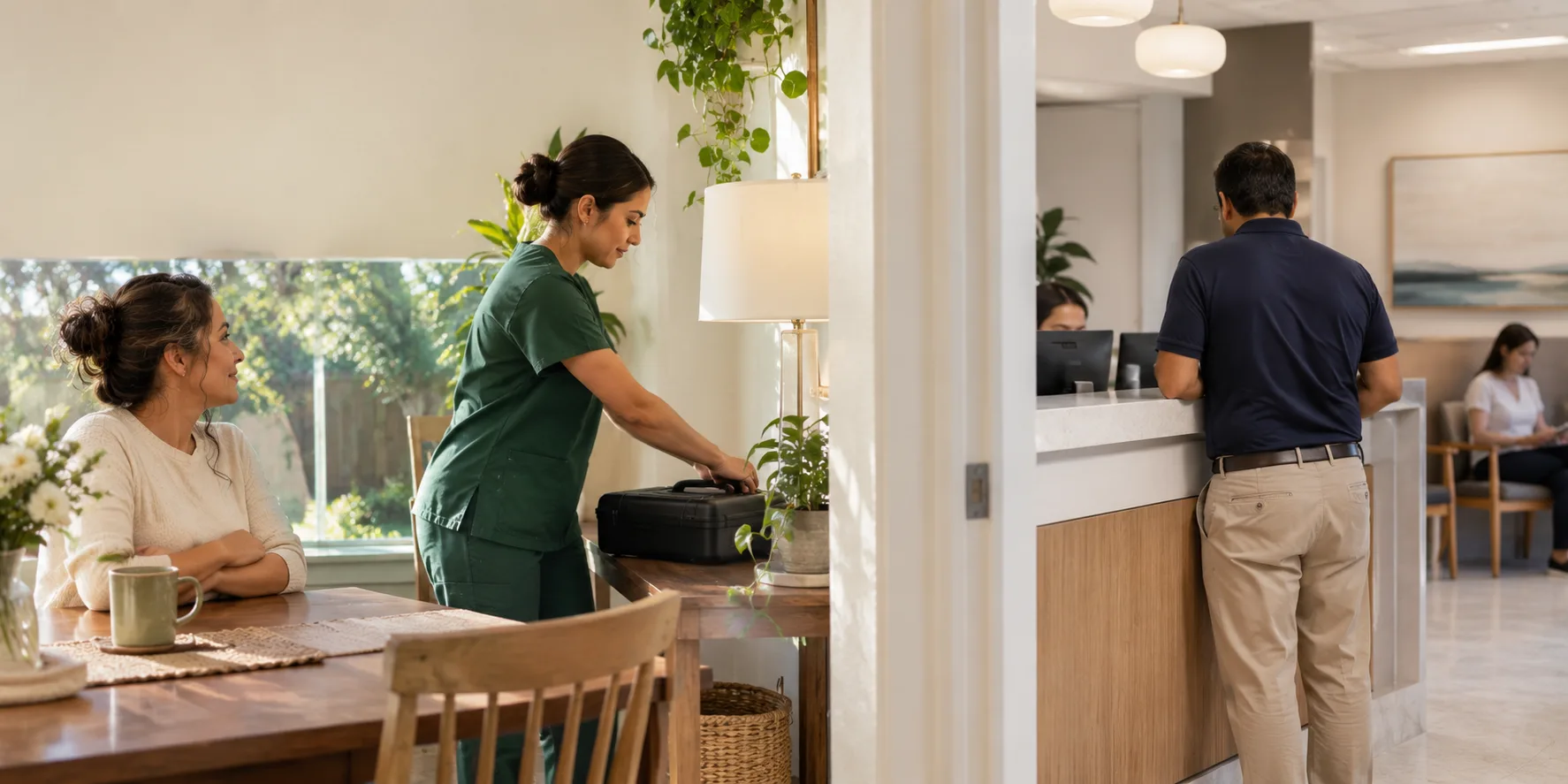
The accuracy of a blood test depends on the test, collection method, sample handling and laboratory analysis not simply whether collection happens at home or in a clinic. A trained phlebotomist can collect a venous sample at home for analysis by a qualified laboratory; a finger-prick kit is a different process. THRYVE offers eligible at-home blood collection in Austin and San Antonio, with lab plans starting at $119.
People deciding between a lab visit vs at home blood test options are asking three things at once: will the result be trustworthy, what will it cost me in total, and how much of my day will it take. This guide answers each in turn for Austin and San Antonio, using public sources for the accuracy question and THRYVE's own published plans for the rest.
Key Takeaways
Accuracy is a property of the whole process: preparation, collection, handling, laboratory analysis and reporting.
CLIA standards apply to qualifying U.S. laboratories that analyze human specimens; collection and transport requirements still matter.
A phlebotomist draw and a self-collection kit are different methods, and the evidence on kits is mixed.
Cost and convenience should be compared as totals: tests, collection, any fee, results review, and your own travel and time.
THRYVE lists Essential, Advanced and Comprehensive plans at $119, $149 and $249. Confirm the included collection method and address eligibility before purchasing.
How accurate is an at-home blood test compared with a lab visit?
There is no single answer because “at-home blood test” can mean professional venous collection, self-collection for laboratory analysis or a rapid self-test. The CDC explains that CLIA establishes quality standards for laboratories testing human specimens. CLIA oversight of the analysis does not by itself guarantee that every collection method, specimen or transport condition is equivalent.
So the honest comparison is step by step. The table lays out where a result can be affected and who handles each stage under three routes.
Stage | What can affect the result | At a lab visit | At-home draw by a phlebotomist | Self-collection kit |
Preparation | Fasting, medicines, supplements and following instructions | You follow the site's instructions | You follow the care team's instructions | You follow the kit instructions |
Collection | Who collects, how much sample is taken, and the method | A phlebotomist at the site | A phlebotomist at your address | You, by finger prick where the test supports it |
Handling and transport | Labeling, storage and transport to the laboratory | The site handles it | The phlebotomist handles it | You package and return it |
Laboratory analysis | Laboratory quality and certification | A certified laboratory | A certified laboratory | A certified laboratory |
Reporting and review | Reference ranges and who interprets the result | Depends on who ordered it | Depends on the plan and consultation | Depends on the service |
The analysis may take place in a laboratory operating under the same applicable standards, but the pre-analytical steps can differ. Collection technique, specimen type, labeling, temperature and time in transit must meet the requirements of the particular test. A professionally collected venous sample should not be grouped with a self-administered finger-prick kit.
CDC: Clinical Laboratory Improvement Amendments (CLIA)
What does the evidence say about self-collection kits?
A 2018 editorial in the British Journal of General Practice, hosted by the U.S. National Library of Medicine, describes home self-testing kits as part of the direct-to-consumer testing market, used without input from health professionals. It reports mixed evidence. Multiple studies, it says, found that kits did not live up to manufacturers' accuracy claims, and an evaluation of 20 tests found only three could be recommended on scientific evidence. A review of 29 kits, though, found that the participants in the reviewed studies were able to perform home tests and obtain accurate results that correlated highly with laboratory tests.
Treat that as a reason for care, not a verdict. The editorial is a British piece from 2018 about self-test kits for a wide range of conditions, and it does not address a venous draw taken by a phlebotomist. What carries over is the practical lesson: a kit places a collection in your hands, so the quality of the sample depends on how well the instructions fit the test and how closely they are followed.
The FDA adds a regulatory note on the wider category. It describes direct-to-consumer tests as tests marketed without a health care provider's involvement, and says they carry varying levels of evidence. It also says tests aimed at general wellness or low-risk medical uses do not necessarily get FDA review before they are offered. Asking what a test is for, and who stands behind it, is fair.
Can labs make mistakes with blood work?
Yes, errors are possible at any step, and laboratory quality guidance treats the whole process as the thing to control: what happens before testing, during testing and after the result is produced. Problems can arise outside the analyzer, which is why preparation and handling matter as much as the laboratory's equipment.
Before testing: missed fasting instructions, an undisclosed medicine or supplement, or a mislabeled sample.
During collection: a sample that is too small for the test, or handled outside the laboratory's requirements.
In transport: delays or storage outside the stated conditions.
After analysis: a result read without its reference range, or without the rest of your history.
You cannot control the laboratory, but you can control the questions you ask. Which laboratory processes the sample? Is it certified? How will the sample travel? Who reads the result with me? Those four questions apply to a lab visit and to an at-home service equally.
MedlinePlus advises following all of the instructions your provider gives and notes that even a small departure, such as eating when you were meant to fast, can change a result. If you slip up, say so at the visit.
What counts as an at-home blood test, and what is direct-to-consumer lab testing?
Three arrangements get the same label, and mixing them up creates much of the confusion.
A draw at home by a phlebotomist. A trained professional comes to your address, collects blood from a vein and sends it to a laboratory. Providers call this mobile phlebotomy, and searchers call it a mobile blood draw or an in-home blood draw. The wider service also goes by blood work from home, at home blood work and blood analysis at home.
A self-collection kit. You collect the sample yourself, sometimes by finger prick for tests that support it, and return it to a laboratory. According to MedlinePlus, some at-home kits collect blood by finger prick.
A self-test. You collect and read the result yourself, with no laboratory involved. Examples sit outside the scope of a laboratory panel.
Direct-to-consumer (DTC) laboratory testing describes how consumers access or purchase testing, not where a specimen is collected. Ordering rules vary by state, test and provider; some services arrange an authorized clinician order as part of checkout. A DTC purchase may lead to a mobile blood draw, a laboratory visit or an eligible self-collection kit. Check the ordering process and collection method separately.
How do the costs of an at-home blood test and a lab visit compare?
The question how much does blood work cost has no single answer, and honest comparisons need totals, which need a list of what is being added up. An at home blood testing service and a collection site price the same pieces in different ways. This guide does not quote lab visit prices, because they differ by site, test and payment route, and a number without those details misleads. What it can do is show the pieces.
Cost element | Lab visit | At-home service | Question to ask |
The tests | Billed by the laboratory or ordering provider | Included in a plan or billed per test | Which markers does this price cover? |
Collection | Part of the site's fee in some cases | Included in some plans and charged separately by some services | Is collection in the price, or extra? |
Visit or trip fee | Depends on the site | Depends on the service and address | Is there a fee for the visit itself? |
Results review | Depends on who ordered the test | Included in some plans, optional in others | Who reviews this with me, and is it included? |
Your own travel and time | Transport, parking and the time set aside | The time you are home for the visit | What does my own trip cost me? |
Payment route | May involve insurance, deductibles or cash prices | Depends on the provider | Does this provider bill insurance? |
Two of those rows are easy to overlook. A lab visit has a personal cost in transport, parking and the hours you set aside, and an at-home service replaces that with the time you are home for the visit. Neither figure can be looked up, so estimate both for your own week.
For a wider look at what blood work costs across Texas, THRYVE's Texas guide works through the pricing questions in detail, and this article stays with the comparison.
what at-home blood testing costs across Texas
Why can two draws give slightly different numbers?
A blood result is a snapshot of one moment, taken under one set of conditions. Preparation, the body's ordinary changes and the way a sample is handled can all move a value a little, and that is true at a collection site and at your kitchen table alike. A small shift between two results does not by itself signal a problem.
This is the reason providers look at trends and context instead of reading one number in isolation. THRYVE says repeat testing lets you and a provider follow how results change over time, where that suits your situation, and that how soon to repeat a panel is a provider's call. Keeping preparation consistent between draws makes the comparison fairer.
What will THRYVE's at-home plans cost an Austin patient?
THRYVE lists single-payment lab plans. The availability of a mobile venous blood draw depends on the specific tests and collection address. Before purchasing, confirm whether the quoted plan includes an at-home phlebotomist visit for your location or whether another approved collection arrangement is required.
Plan | Price | Biomarkers | Provider consultation |
Essential | $119 | 75 | Not included. Add one for $89. |
Advanced | $149 | 100 | Not included. Add one for $89. |
Comprehensive | $249 | 110+ | Built in (30 minutes), with a personalized care plan |
Essential and Advanced are listed as lab-testing plans without an included provider consultation. Comprehensive is listed with a 30-minute consultation and a personalized care plan. A separate $89 consultation has been advertised, but whether it can be added to either lower-tier plan at checkout must be confirmed; do not present $208 or $238 as guaranteed bundle totals. THRYVE describes its plans as self-pay and does not bill insurance.
Extra testing outside a plan may carry its own charge, which THRYVE says it confirms before anything is ordered. Look for that kind of line in any provider's terms.
How does at-home lab testing work from checkout to results?
The sequence has four steps, and the first one differs from a typical lab visit because the ordering is part of the purchase.
Choose a plan and confirm eligibility. Review the exact biomarkers, collection requirements and address coverage. If an at-home phlebotomist visit is essential to you, ask THRYVE to verify the method before payment. The ordering process is then completed through the plan purchase.
Schedule the collection after purchase. Follow the instructions in your account or from the care team. Appointment options and whether collection is performed at home, by an eligible kit or through an approved laboratory partner depend on the test and your location.
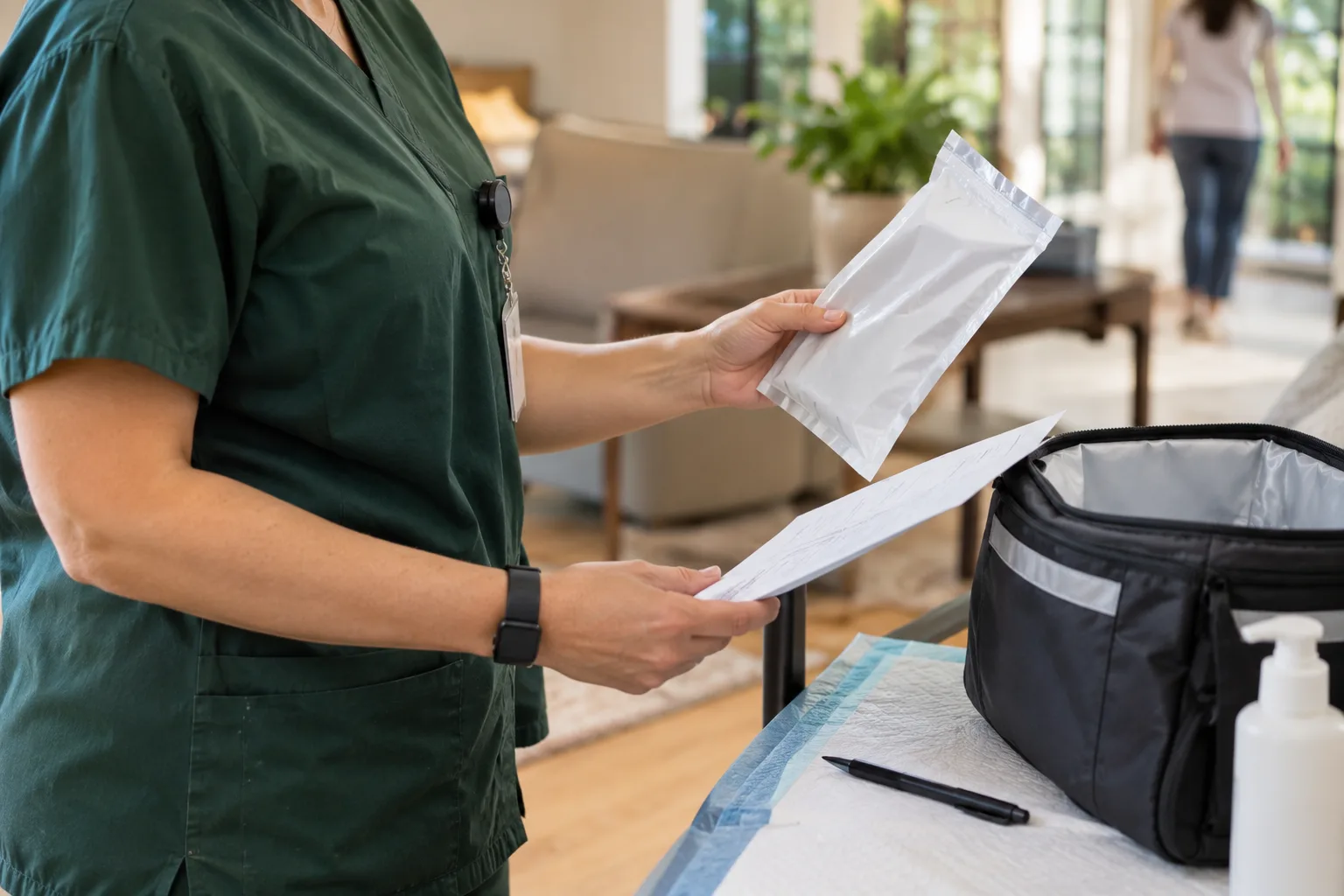
Get ready and give the sample. Instructions come first, including fasting guidance if your tests call for it. The sample is then collected, labeled and handled to the laboratory's requirements.
Receive the report. The laboratory analyzes the sample and the report appears in THRYVE's secure system. Turnaround varies by test and laboratory. A consultation, where one is part of your plan or added, is how the results get explained.
A professional venous draw, a self-collection kit and a partner-laboratory appointment are not equivalent services. Ask THRYVE to identify the method required for your selected tests and address before purchasing; final appointment details can then be coordinated during intake.
THRYVE's mobile phlebotomy service is how the at-home draw is arranged, and its biomarker panels set what is tested. The panels cover blood-based measurements and selected urine markers, and the full marker lists sit on the panels page.
mobile phlebotomy at your address
How long do results take, and does a wait mean something is wrong?
Turnaround depends on the test and the laboratory, and an at-home route adds a transport step that a draw at the laboratory's own site skips. THRYVE says its turnaround varies by test and laboratory and quotes no single figure, so ask for the expected wait on the specific tests you are buying.
A longer wait is not, on its own, evidence about your result. It can simply reflect what the test involves and how the laboratory schedules its work. If you have symptoms that feel severe or sudden, seek care straight away and do not wait for a report.
Which tests can be collected at home, and which cannot?
Collection depends on the specimen and the laboratory requirements. THRYVE biomarker panels may include blood measurements and selected urine markers; those specimens do not necessarily use the same collection process. A test requiring special processing or an unsuitable specimen for home collection may need an approved laboratory site. Check the current marker list and collection instructions for the plan you select.
The same logic applies to kits from any seller. A kit supports only the tests it was built for, so a kit cannot be treated as a stand-in for a full panel. When you compare an at-home blood test with a lab visit, compare the specific tests on each side and not the label on the box.
Is an at-home blood test private and secure?
Privacy depends on how a provider stores and shares your results, and it is a fair thing to ask. THRYVE says results are delivered through a secure system that it describes as HIPAA-compliant. You can ask any provider where your results are kept, who can see them and how you can get a copy.
At the visit itself, a draw at home takes place in your own space, so you control who is present. A site visit happens in a shared building. Neither setting is better in all cases, and some people feel more at ease in one than the other.
What should you do before the sample is taken?
Preparation is the part of the process you control, and it applies on both routes. Start with the written instructions for your tests, and tell the person collecting the sample about anything you did differently.
Check whether your tests call for fasting, and if so, for how long.
List the medicines, vitamins and supplements you take so the provider knows about them.
Keep identification at hand for the collection visit.
For a visit at home, pick a steady chair and a bright spot where the phlebotomist can set up.
Leave your medicines as they are unless the right healthcare professional says otherwise.
Mention any past trouble with blood draws before the visit begins.
What happens to your sample after it leaves your home?
A phlebotomist handles the specimen to the laboratory's requirements, and it travels to a designated laboratory for analysis. THRYVE says its results are processed through CLIA-certified laboratories, which ties back to the federal standards the CDC describes. Your report then arrives in THRYVE's secure system.
Each value comes with the laboratory's reference range. Read the value against that range and against your own history, not against a number from another laboratory, because each laboratory supplies its own range.

Where can you get blood work done near you in Austin, and when is a lab visit the better choice?
If you already have a physician’s laboratory order, need specialized specimen handling or prefer an established collection site, a laboratory visit may be more suitable. In Austin, compare the tests offered, whether your order is accepted, any appointment requirements and the full out-of-pocket cost. THRYVE does not operate a public walk-in laboratory.
Factor | Walk-in collection site | THRYVE at-home collection |
Where | At a site you travel to | At your address or another approved location, where available |
Booking | Walk in, or schedule if the site offers it | Arranged after purchase, around your test and address |
Ordering | You may need an order, depending on the site | The plan's labs are ordered automatically at checkout |
Specimen | Depends on the test | A draw, a kit for applicable specimens, or a partner laboratory |
After the draw | Results route through the ordering provider or the service | Results arrive in THRYVE's secure system, and a consultation is a separate choice |
Best when | You already hold an order for a specific laboratory, or a test needs on-site handling | Travel, mobility or scheduling make a site visit hard, and the test supports home collection |
THRYVE's own testing page says laboratory testing still plays a central role in preventive and diagnostic care, and that some patients are not a fit for testing. A fixed panel may not match what your physician wants, so if a physician is monitoring a condition, bring up new testing with that physician first.
Searches for advanced diagnostic testing in Austin also bring up imaging centers and hospital systems, which are different services from laboratory panels. THRYVE's page describes its own approach to testing and when it applies.
advanced diagnostic testing in Austin
Is at-home lab testing available across Austin?
THRYVE describes Austin-area service coverage that includes central neighborhoods and surrounding communities such as Cedar Park, Round Rock and Georgetown. Clinical consultations take place by telehealth, while eligible specimen collection is arranged at home. THRYVE does not offer in-person physician appointments or a public walk-in collection center.
In the Austin metro, home-collection availability depends on the specific test, exact address and appointment capacity. Ask THRYVE to verify that a mobile phlebotomist can collect your required specimen at your address; do not assume that every neighborhood or panel is eligible.
how an at-home blood draw works in Austin

What about San Antonio?
THRYVE also serves San Antonio and surrounding communities, subject to collection eligibility. Patients can access virtual consultations, and a mobile phlebotomist may be arranged for eligible tests and addresses. Confirm the collection method and any alternative partner-laboratory requirement before purchasing.
THRYVE is serving San Antonio and surrounding areas, and the city sprawls much as Austin does, so the trip to a collection site can vary widely between neighborhoods. If you are comparing a mobile blood draw in San Antonio against a lab visit, apply the same cost table and the same questions as above, and confirm the collection for your own address before you buy.
Do you need a doctor's order or an office visit first?
It depends on the provider, which is why the question belongs on your list. Some collection sites want a signed order and some direct-access services treat the purchase as the order. THRYVE builds the ordering into checkout, so you do not book an office visit first. If you already hold an outside order and would like it used, ask the care team before you buy.
Either way, ordering is separate from interpretation. A lab value cannot diagnose symptoms by itself, and a number outside the reference range is a prompt for questions, not a diagnosis. Decide who will help you read the report before the sample is taken.
Who may prefer an at-home draw, and who may prefer a site?
THRYVE's service page lists people for whom at-home collection may be practical: professionals who want less travel and waiting time, parents and caregivers arranging testing for family members, older adults, people with limited mobility, patients doing follow-up testing a provider ordered, and people who simply prefer a familiar setting. These are examples, not promises, and home collection does not suit all tests.
You may lean toward a lab visit if you hold an order tied to a specific laboratory, if you are happy to travel, or if your test needs on-site handling.
You may lean toward at-home collection if travel is the obstacle, if you are arranging care for a relative, or if you want ordering and collection handled in one purchase.
You may want to speak with your physician first if you take prescription medicines or have a condition under active monitoring.
What should you ask before choosing either route?
Which laboratory analyzes the sample, and is it certified?
Who collects the sample, and is the method a draw or a kit?
What does the price cover: tests, collection, any visit fee, the report and a consultation?
Who orders the tests, and can an outside order be used?
Who reviews my results with me, and what does that cost?
Is collection available at my address, and when will I be told?
A provider that answers these plainly is giving you a basis for comparison that goes beyond the headline price.
About THRYVE Wellness Clinic
THRYVE Wellness Clinic combines virtual provider care with laboratory testing and mobile phlebotomy in supported Texas service areas, including Austin and San Antonio. Consultations and results discussions are conducted remotely; the in-person component, when eligible, is specimen collection by a phlebotomist. THRYVE does not offer in-person provider visits or a public walk-in laboratory.
Quick answers on at-home blood tests and lab visits
Is an at-home blood test as accurate as going to a lab?
It depends on the test and how the specimen is collected, handled and analyzed. A venous sample taken at home by a trained phlebotomist can be suitable for the same laboratory assays used after a clinic draw when the laboratory’s requirements are met. Finger-prick and other self-collection kits have test-specific limitations.
What does THRYVE charge for at-home lab testing in Austin?
THRYVE currently lists Essential at $119 (75 biomarkers), Advanced at $149 (100) and Comprehensive at $249 (110+). Mobile blood collection depends on the test and address. Comprehensive lists a consultation; confirm whether a separate consultation can be purchased with either lower-tier plan.
Is a doctor's order required for blood work in Austin?
Requirements vary by provider, test and state. Some laboratories need a clinician order, while other services coordinate an authorized order as part of the purchase. THRYVE describes ordering as part of its plan checkout; confirm whether it accepts outside orders before relying on that option.
Is a direct-to-consumer lab test the same as an at-home blood test?
No. Direct-to-consumer testing describes consumer access to testing; collection may happen at home with a phlebotomist, through a suitable self-collection kit or at a laboratory site. Depending on the service, a clinician may still authorize the order.
Does insurance pay for an at-home blood test?
THRYVE is paid for directly and does not bill insurance. Other providers handle this differently, so get each one to state what it bills, whether a visit fee applies and what you would owe in total.
Does an at-home blood test need fasting?
Only if the tests are ordered call for it, and the care team says so in the instructions sent with your booking. Per MedlinePlus, fasting means taking in only water for a stretch of time, and the stretch depends on the test.
Check at-home lab testing availability in Austin and San Antonio
Compare the available THRYVE plans and ask the care team to confirm whether a mobile blood draw is available for your selected tests and Austin or San Antonio address. The Essential plan is listed from $119 for 75 biomarkers; verify current pricing, specimen requirements and any consultation fees before checkout.